Greenie Get the app
Prayer plant care
Maranta leuconeura · Marantaceae
Also called Red-veined prayer plant, Rabbit tracks, Herringbone plant.
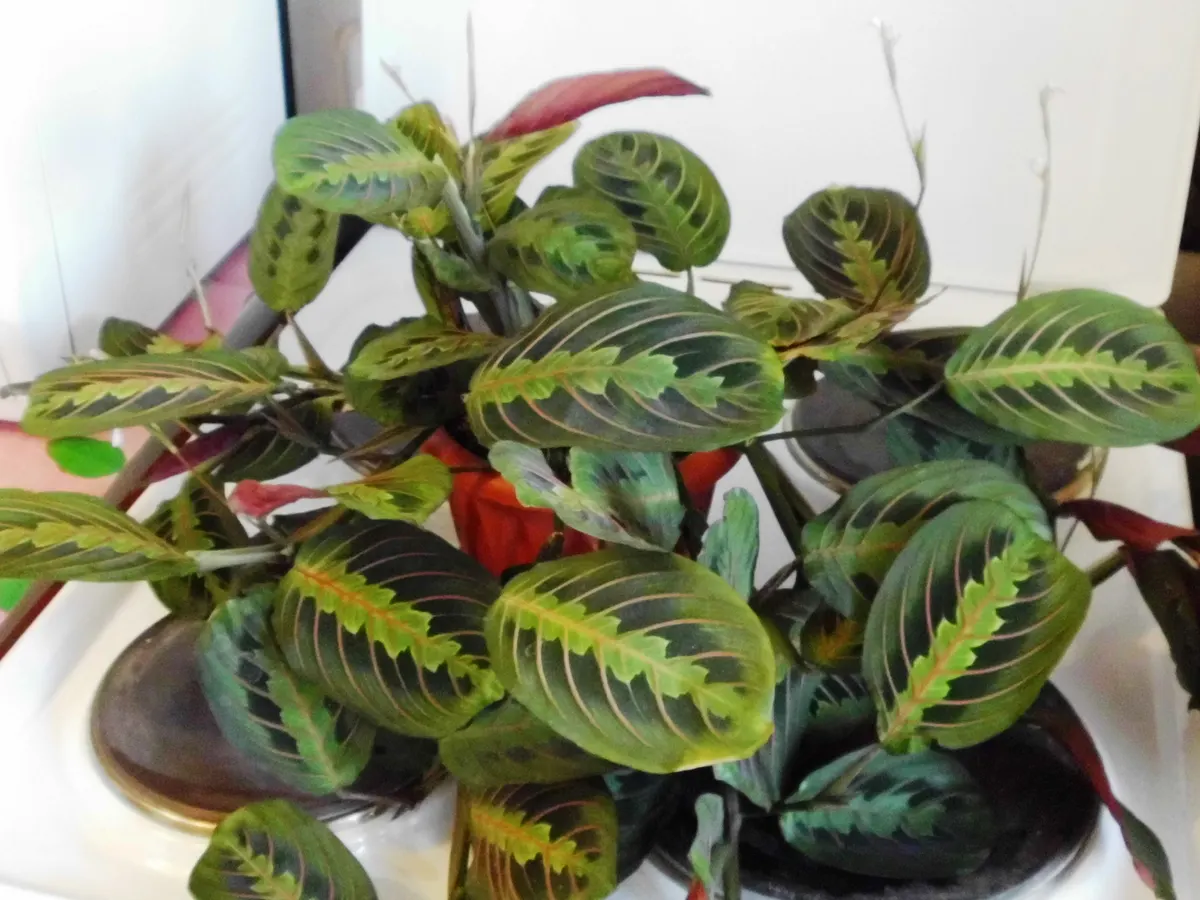
A low, spreading plant from the forests of Brazil with oval leaves marked by bold veins and dark blotches. Each evening the leaves fold upward like hands in prayer and open again in the morning. It suits a warm, humid room with good light but no direct sun.
Light
Bright IndirectWatering
WeeklyDifficulty
MediumPets
Not confirmedHeight indoors
15-30 cm
GrowthUnconfirmed
Moderate
TemperatureUnconfirmed
18-27 °C
Not below 15 °C
Humidity
50% - 70%
Likes humid air
Soil pHUnconfirmed
5.5-6.5
Slightly acidic soil
Native to
- Brazil
Through the year
Keep the soil lightly moist from spring to late summer; in winter let the top 2 cm dry before watering.
-
Spring
WeeklyResume feeding and divide or repot if needed.
-
Summer
WeeklyKeep the soil evenly moist and the air humid.
-
Autumn
Every 2 weeksReduce feeding and water a little less.
-
Winter
Every 2 weeksKeep it warm and away from drafts; water only when the surface is dry.
Feeding
Every 4 weeks in spring and summer. Balanced liquid fertilizer at half strength. Cut back sharply from autumn to late winter.
Care tips
-
Grow it wide, not tall
It spreads sideways, so a shallow pot or hanging basket suits it.
-
Trim leggy stems
Cut just above a node to keep the plant bushy; the cuttings root in water.
-
Raise the humidity
Group it with other plants or stand the pot on a tray of wet pebbles.
-
Divide when crowded
Split the rhizomes in spring to make new plants.
Common problems
-
Faded leaf colour
What you seeThe pattern washes out and leaves look pale or bleached.
What to doMove it out of direct sun to a spot with bright, filtered light.
-
Brown leaf tips
What you seeTips and edges dry and turn brown.
What to doRaise humidity, use filtered or rain water and avoid overfeeding.
-
Root rot
What you seeStems go soft at the base and the plant wilts even though the soil is wet.
What to doRepot into fresh, free-draining mix, cut away dark roots and water less often.
Pets
Is prayer plant safe for cats and dogs?
Not confirmed. Not on the ASPCA lists under Maranta. ASPCA's Prayer Plant entry is filed under the related Calathea insignis, which it lists as non-toxic to cats and dogs.
Good to know
-
The folding of the leaves at night follows a daily rhythm and is driven by a joint at the base of each leaf blade.
-
The genus is named after Bartolomeo Maranta, a 16th-century Italian physician and botanist.