Greenie Get the app
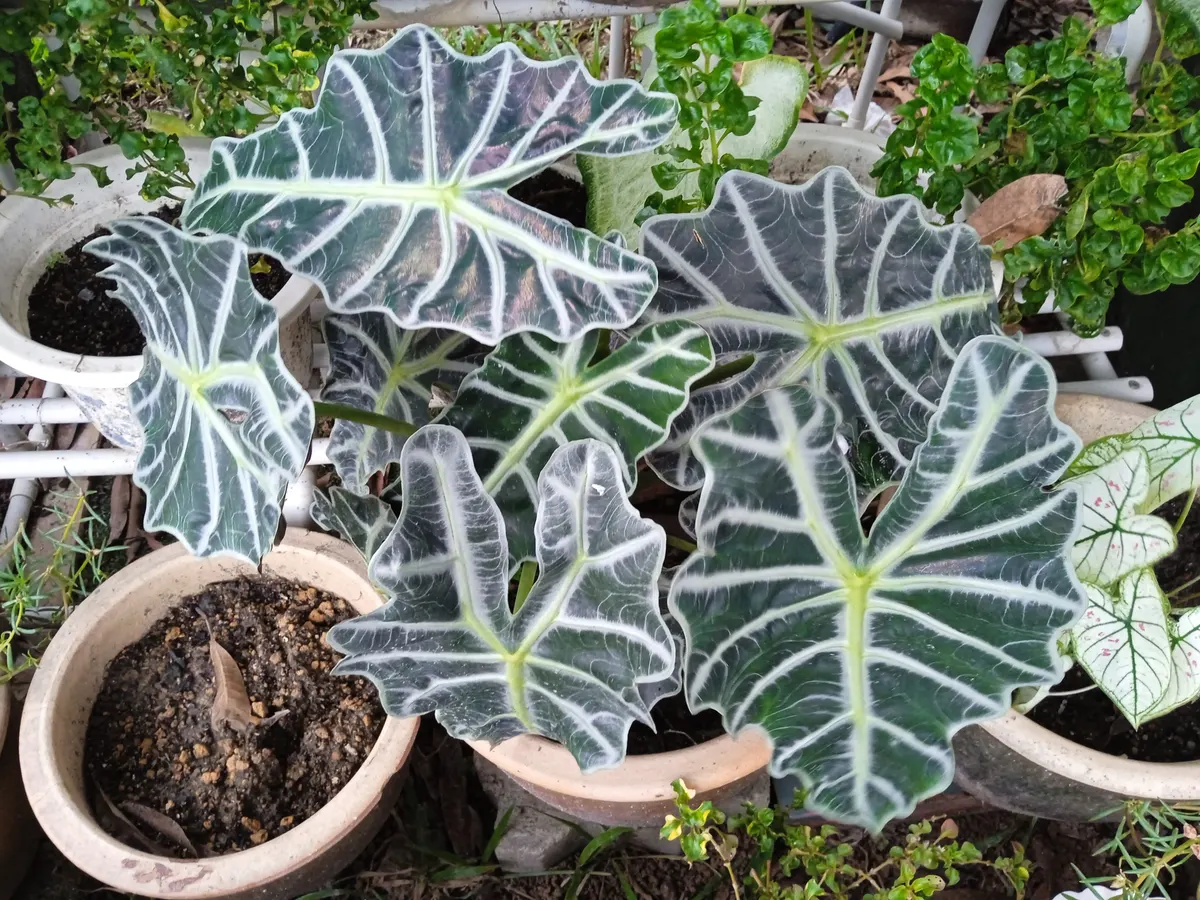
Alocasia Polly care
Alocasia × mortfontanensis 'Polly' · Araceae
Also called Alocasia × amazonica, African mask plant, Amazonian elephant's ear.
A compact cultivated hybrid with arrow-shaped, almost black-green leaves and thick silvery-white veins. It stays under 60 cm indoors but needs warmth, high humidity and soil that is moist yet drains well. In cool, dark months it often slows down and may lose a few leaves.
Light
Bright IndirectWatering
WeeklyDifficulty
MediumPets
Toxic to cats and dogsHeight indoors
30-60 cm
Growth
Moderate
Temperature
18-27 °C
Not below 16 °C
Humidity
60% - 80%
Likes humid air
Soil pH
5.5-6.5
Slightly acidic soil
Through the year
Water when the top 2 to 3 cm of soil are dry; in winter let it dry a bit more and water about every 2 weeks.
-
Spring
WeeklyRepot if crowded, divide offsets and start feeding.
-
Summer
WeeklyKeep humidity high and water regularly.
-
Autumn
Every 2 weeksStop feeding and reduce watering as growth slows.
-
Winter
Every 2 weeksKeep it above 16 °C in a bright spot and water sparingly.
Feeding
Every 4 weeks in spring and summer. Balanced liquid fertilizer at half strength. Do not feed in winter.
Care tips
-
Keep it warm
It sulks below 16 °C; keep it away from cold windows and drafts.
-
Expect a winter pause
Losing an older leaf or two in winter is normal; growth returns in spring.
-
Divide the offsets
Separate the small plants that form at the base when repotting in spring.
-
Use an airy mix
A chunky, peat-free aroid mix with bark and perlite keeps the roots from staying wet.
Common problems
-
Spider mites
What you seeFine webbing and pale stippling on leaves, worse in dry air.
What to doWipe and rinse the leaves, raise humidity and treat with insecticidal soap or neem oil.
-
Root and stem rot
What you seeLeaves yellow and collapse and the base of the stems turns soft.
What to doLet the soil dry more between waterings, remove rotten parts and repot into airy, free-draining mix.
-
Pale, burnt leaves
What you seeLeaves look washed out or have brown patches.
What to doMove it out of direct sun to bright, filtered light.
Pets
Is alocasia polly safe for cats and dogs?
Toxic to cats and dogs. Contains insoluble calcium oxalate crystals; chewing causes mouth pain and swelling, drooling, vomiting and difficulty swallowing.
Good to know
-
The plant sold as Alocasia × amazonica is generally thought to be a cross between A. longiloba and A. sanderiana; Kew's checklist treats it under the older name Alocasia × mortfontanensis.
-
That name comes from Mortefontaine in France, where the hybrid was first raised by a French nurseryman.