Greenie Get the app
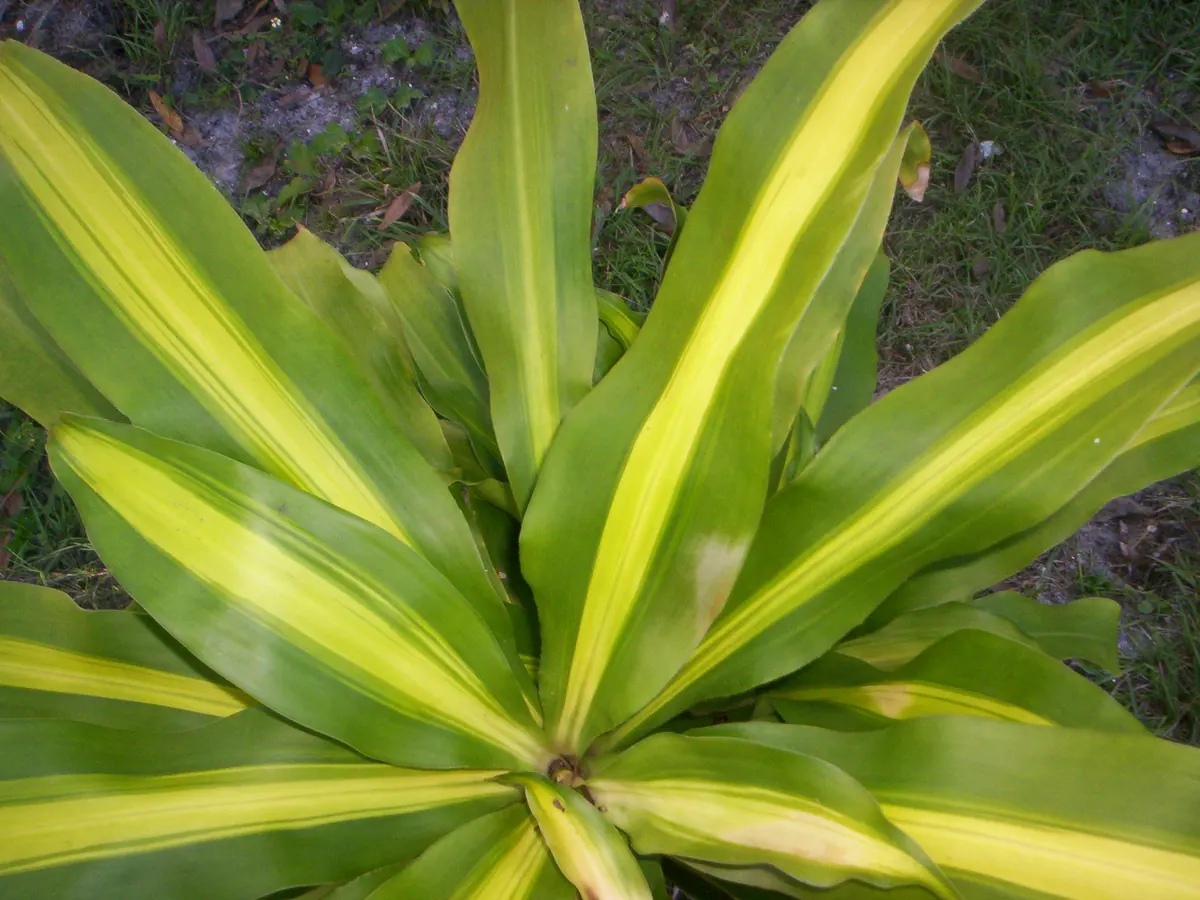
Corn plant care
Dracaena fragrans · Asparagaceae
Also called Cornstalk plant, Dracaena, Janet Craig.
A tree-like dracaena from tropical Africa with a thick cane topped by rosettes of long, arching leaves that look like a corn stalk. Indoors it grows slowly to 1-2 m and handles moderate light well. Its main weakness is fluoride and salt in tap water, which burn the leaf tips.
Light
Bright IndirectWatering
WeeklyDifficulty
EasyPets
Toxic to cats and dogsHeight indoors
1.2-1.8 m
Growth
Slow
Temperature
16-24 °C
Not below 10 °C
HumidityUnconfirmed
40% - 60%
Average room humidity
Soil pH
6.0-6.5
Slightly acidic soil
Native to
- Angola
- Benin
- Cameroon
- Central African Republic
- Congo - Brazzaville
- Congo - Kinshasa
- Equatorial Guinea
- Ethiopia
- GMB
- Ghana
- Guinea
- São Tomé & Príncipe
- Côte d’Ivoire
- Kenya
- Liberia
- Malawi
- Mozambique
- Nigeria
- Rwanda
- Sierra Leone
- Sudan
- South Sudan
- Tanzania
- Togo
- Uganda
- Zambia
- Zimbabwe
Through the year
Water thoroughly once the soil surface is dry, using room-temperature water, and never let the pot dry out completely. Water less from autumn to late winter.
-
Spring
WeeklyStart feeding and repot if roots come out of the drainage holes.
-
Summer
WeeklyKeep the soil lightly moist; it can go outside in shade if nights stay above 10 °C.
-
Autumn
Every 2 weeksStop feeding and water less often.
-
Winter
Every 2 weeksKeep it warm and away from heaters and cold glass; run a humidifier if the tips brown.
Feeding
Every 4 weeks in spring and summer. Liquid foliage-plant fertilizer, free of superphosphate. Do not feed in winter.
Care tips
-
Avoid fluoride
Use rain or filtered water and skip fertilizers that contain superphosphate; both limit leaf-tip burn.
-
Give it good light
Bright, filtered light keeps the leaves broad and well coloured; in deep shade new leaves come out narrower.
-
Cut back a leggy cane
If a cane gets too tall and bare, cut it at the height you want; new leaves sprout below the cut.
-
Keep it away from cold drafts
Do not put it near doors or air conditioning, and bring it inside before nights fall below 10 °C if it spends summer outdoors.
Common problems
-
Brown leaf tips
What you seeTips and edges turn brown or yellow and dry.
What to doWater with rain or filtered water, flush the pot with plenty of water now and then to clear salts, and raise the humidity.
-
Root rot
What you seeLeaves brown or droop and the soil stays wet for days.
What to doWater only once the surface has dried and make sure the pot drains freely.
-
Mealybugs, scale and spider mites
What you seeCottony clumps, small brown bumps or fine webbing on the leaves.
What to doWipe pests off with a cloth or swab dipped in rubbing alcohol and repeat until no new ones appear.
Pets
Is corn plant safe for cats and dogs?
Toxic to cats and dogs. Contains saponins; eating it can cause vomiting (sometimes with blood), drooling, loss of appetite and depression, and dilated pupils in cats.
Good to know
-
Its flowers open at night and are strongly scented, which gives the species its name, fragrans; they rarely appear indoors.
-
In its native forests it can grow into a tree more than 6 m tall.
-
The genus name comes from the Greek word for a female dragon.