Greenie Get the app
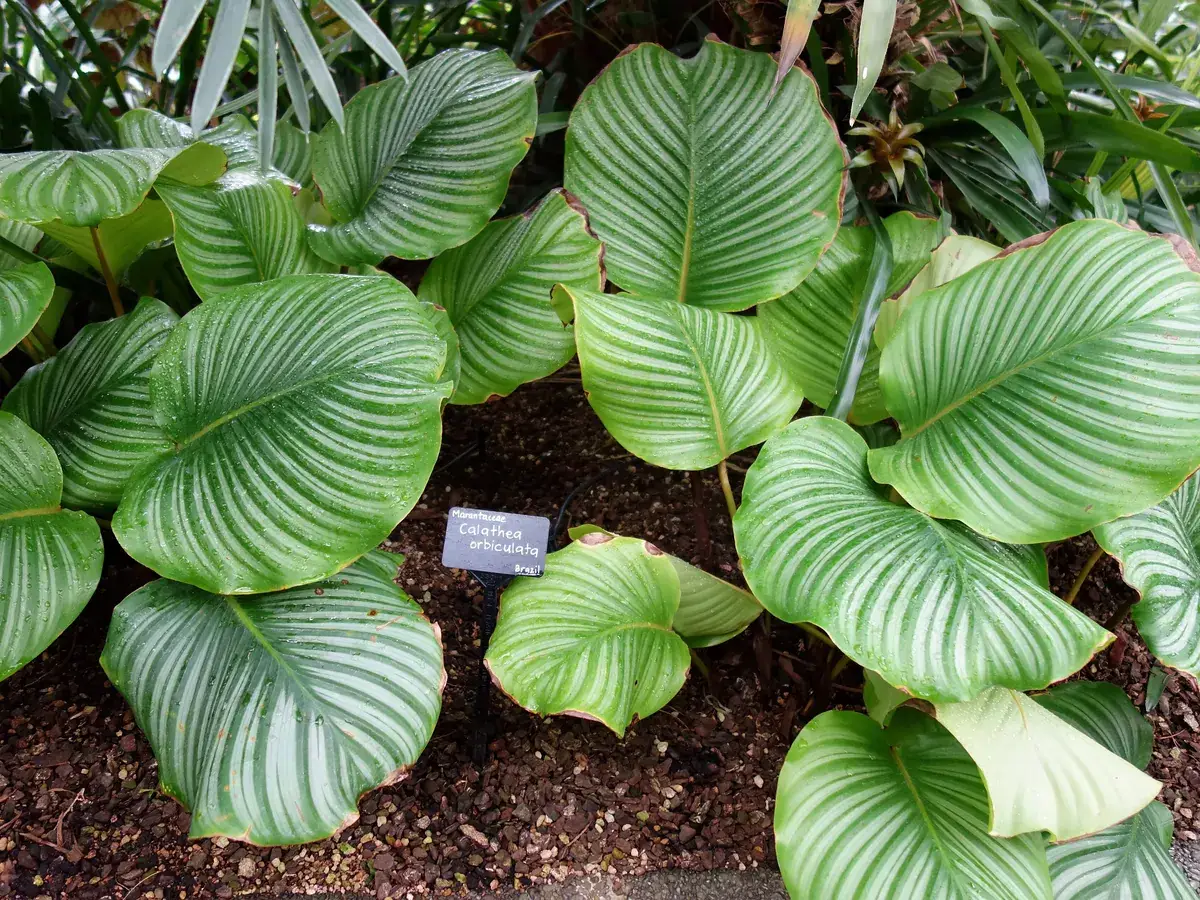
Curling or crispy leaves · Calathea orbifolia
Why are my calathea leaves curling or crispy?
Calathea leaves curl when the plant is short of water, either because the soil has dried out or because the air is too dry, and the edges go brown and crispy for the same reasons plus fluoride and salts in tap water. Keep the soil evenly moist, raise humidity to at least 60% with a humidifier or pebble tray, and water with rain or distilled water. The same applies to orbifolia, roseopicta, rattlesnake and other calatheas.
Check these first
-
Check the time of day first: calatheas raise and fold their leaves at night and open them again by day, which is normal movement, not curling.
-
Push a finger 2 cm into the soil. If it is dry, the curling is most likely thirst; if it is wet and the stems are soft or yellowing, look at the roots instead.
-
Notice when it started: crispy edges that appear once the heating comes on point to dry air.
-
Look at the brown parts: browning at the tips and edges points to dry air or to tap water and fertilizer salts, while pale or brown patches in the middle of the leaf suggest direct sun.
-
Check where the plant stands: near a door, a cold window, an air conditioner or a radiator, temperature swings and drafts stress it.
-
Turn a few leaves over and look for fine webbing and pale speckling, the sign of spider mites.
Causes and fixes
-
Soil drying out
How to tellLeaves roll inward along the midrib and look limp, the soil is dry below the surface and the pot feels light.
What to doWater thoroughly until it drains, then empty the saucer. Afterwards water whenever the top 2 cm feel dry, which is about weekly in spring and summer and every two weeks in winter.
-
Low humidity
How to tellEdges and tips turn brown and papery and leaves curl even though the soil is moist; it gets worse in winter or near heaters.
What to doRaise humidity to at least 60% with a humidifier, or set the pot on a tray of wet pebbles with its base above the water line. Grouping plants or growing it in a bright bathroom also helps. Move it away from radiators and vents.
-
Fluoride and salts in tap water or fertilizer
How to tellBrown, dry tips and margins that keep appearing even though the soil stays evenly moist and the air is humid, sometimes with a crust on the soil.
What to doSwitch to rain or distilled water and run plenty through the pot to wash out built-up salts. Feed only in spring and summer with a balanced liquid fertilizer at half strength, about once a month, and not at all in winter.
-
Cold drafts and temperature swings
How to tellCurling or damage shows up after a cold night or when the plant sits near a door, a cold window or air conditioning.
What to doKeep it at a steady 18 to 24 °C and never below 16 °C, away from drafts, cold glass and heating vents.
-
Direct sun
How to tellPale, bleached or scorched brown patches, mostly on the side facing the window.
What to doMove it to bright, indirect light or filtered light, out of any direct sun.
-
Spider mites
How to tellFine webbing and pale speckling on the leaf undersides, with leaves that dull and curl over time.
What to doRinse the leaves in the shower, wipe the undersides and treat with insecticidal soap, repeating until no mites are left. Higher humidity makes it harder for them to come back.
Stop it coming back
-
Keep the soil evenly moist but never soggy.
-
Run a humidifier or pebble tray, especially while the heating is on.
-
Water with rain or distilled water instead of tap water.
-
Keep the plant at a steady temperature, away from drafts and heaters.
-
Wipe the leaves now and then and check the undersides for mites.
When to worry
When to worry
Leaves that fold up in the evening and open by morning, and new leaves that emerge rolled before they unfurl, are normal. Curling from thirst should ease soon after a good watering, and crispy edges, once formed, stay brown but stop spreading when you fix the air and water. Worry when the soil stays wet yet leaves keep curling, yellowing and drooping, or the stems go soft at the base: that is root rot from overwatering. Unpot it, cut away dark, mushy roots, repot in fresh, well-drained mix and water less often. A badly damaged clump can be divided in spring to save its healthy sections.