Greenie Get the app
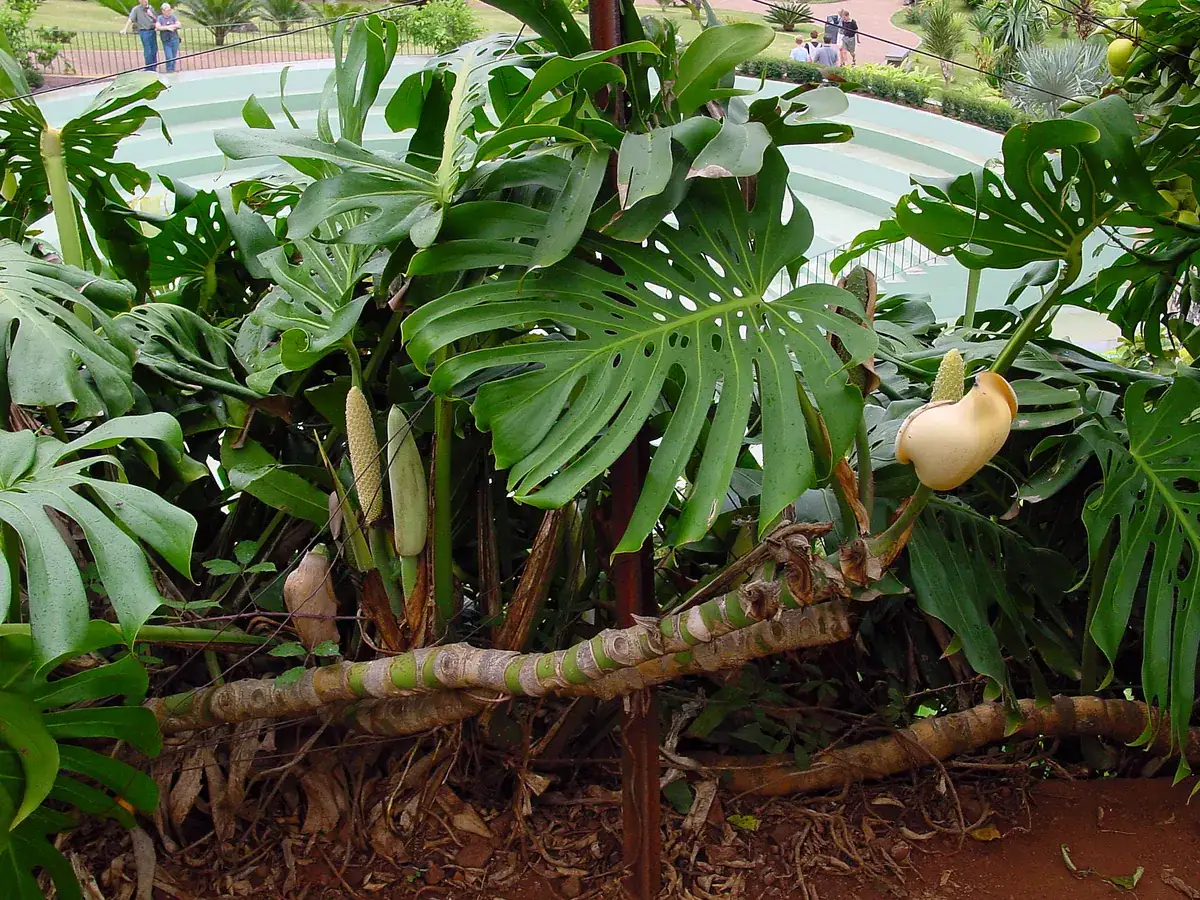
Yellow leaves · Monstera
Why are my monstera leaves turning yellow?
Most yellow monstera leaves come from soil that stays wet for too long, which starves the roots of air and can lead to root rot. Let the top 5 cm of soil dry before you water again, make sure the pot drains freely, and empty the saucer after watering. If the soil is dry and the leaves are still yellowing, look at light, cold drafts and how long it has been since the plant was fed or repotted.
Check these first
-
Push a finger 5 cm into the potting mix. If it is still damp several days after watering, overwatering is the most likely cause.
-
Note which leaves are yellow: one old leaf at the bottom is normal ageing, while old and new leaves yellowing together points to a watering or root problem.
-
Ease the plant out of its pot and look at the roots. Healthy roots are firm and pale; dark, soft, mushy roots mean root rot.
-
Check the light. A monstera far from a window grows thin, pale leaves and sheds its lower ones.
-
Think about the spot in winter: a cold window, an outside door or an air-conditioning vent can yellow leaves within days.
-
Turn a few leaves over and look for fine webbing and pale speckles, the signs of spider mites.
Causes and fixes
-
Overwatering and root rot
How to tellSeveral leaves yellow at once, often starting low on the plant, while the soil is still wet. In bad cases the roots are brown and soft and the base of the stems feels mushy.
What to doStop watering until the top 5 cm of soil are dry, and pour off any water in the saucer or outer pot. If roots are rotten, cut them away, repot into fresh, chunky, well-draining aroid mix in a pot with drainage holes, and water sparingly until new growth appears.
-
Underwatering
How to tellThe potting mix is dry right through and has shrunk from the pot. Lower leaves yellow and drop first, and the remaining leaves may droop or get crisp brown edges.
What to doWater slowly until it runs out of the drainage holes, let it drain, and repeat if the dry mix shed the water. From then on water when the top 5 cm of soil are dry instead of on a fixed day.
-
Too little light
How to tellLower leaves yellow and fall, new leaves come out small and without splits, and the stems stretch toward the window. The soil takes a long time to dry.
What to doMove the plant closer to a bright window where it gets plenty of light but no hot midday sun. In winter it may need to sit nearer the glass than in summer, away from cold drafts.
-
Cold drafts or a sudden drop in temperature
How to tellYellowing appears soon after a cold night, a move, or a spell next to a door, cold window or air-conditioning vent, and the soil moisture is normal.
What to doMove the plant to a steady, warm spot away from drafts and radiators, and keep it off cold windowsills at night in winter.
-
Hungry or pot-bound plant
How to tellOlder, lower leaves fade to pale yellow evenly over weeks, growth is slow, and roots circle the pot or poke out of the drainage holes. It has not been fed or repotted for a long time.
What to doFeed with a balanced liquid fertilizer at half strength every 4 weeks in spring and summer. If the roots fill the pot, repot in spring into fresh mix one size up.
-
Spider mites
How to tellLeaves look dull and finely speckled with yellow before they yellow all over, and there is thin webbing on the undersides, worst in warm, dry rooms.
What to doWipe both sides of every leaf, rinse the plant in the shower and treat with insecticidal soap, repeating until no mites remain. Keep it away from the rest of your plants until it is clean.
Stop it coming back
-
Water by touch, not by calendar: only when the top 5 cm of soil are dry, which is far less often in winter.
-
Use a pot with drainage holes and never leave the plant standing in water.
-
Give it bright, indirect light and move it closer to the window in winter.
-
Keep it away from cold drafts, radiators and air-conditioning vents.
-
Feed in spring and summer and repot every 2 to 3 years so the roots have fresh mix.
When to worry
When to worry
One old leaf near the bottom turning yellow and dropping now and then is normal as the plant grows. Worry when several leaves yellow at the same time, when new leaves yellow as well as old ones, or when stems feel soft at the soil line: that usually means root rot. Unpot it straight away, cut off every dark, mushy root and repot in fresh, dry mix. If most of the roots are gone, take a cutting from a healthy stem with at least one node and root it in water, since the parent may not recover. Remove leaves that are fully yellow; they will not turn green again.