Greenie Get the app
Monstera care
Monstera deliciosa · Araceae
Also called Swiss cheese plant, Split-leaf philodendron, Mexican breadfruit.
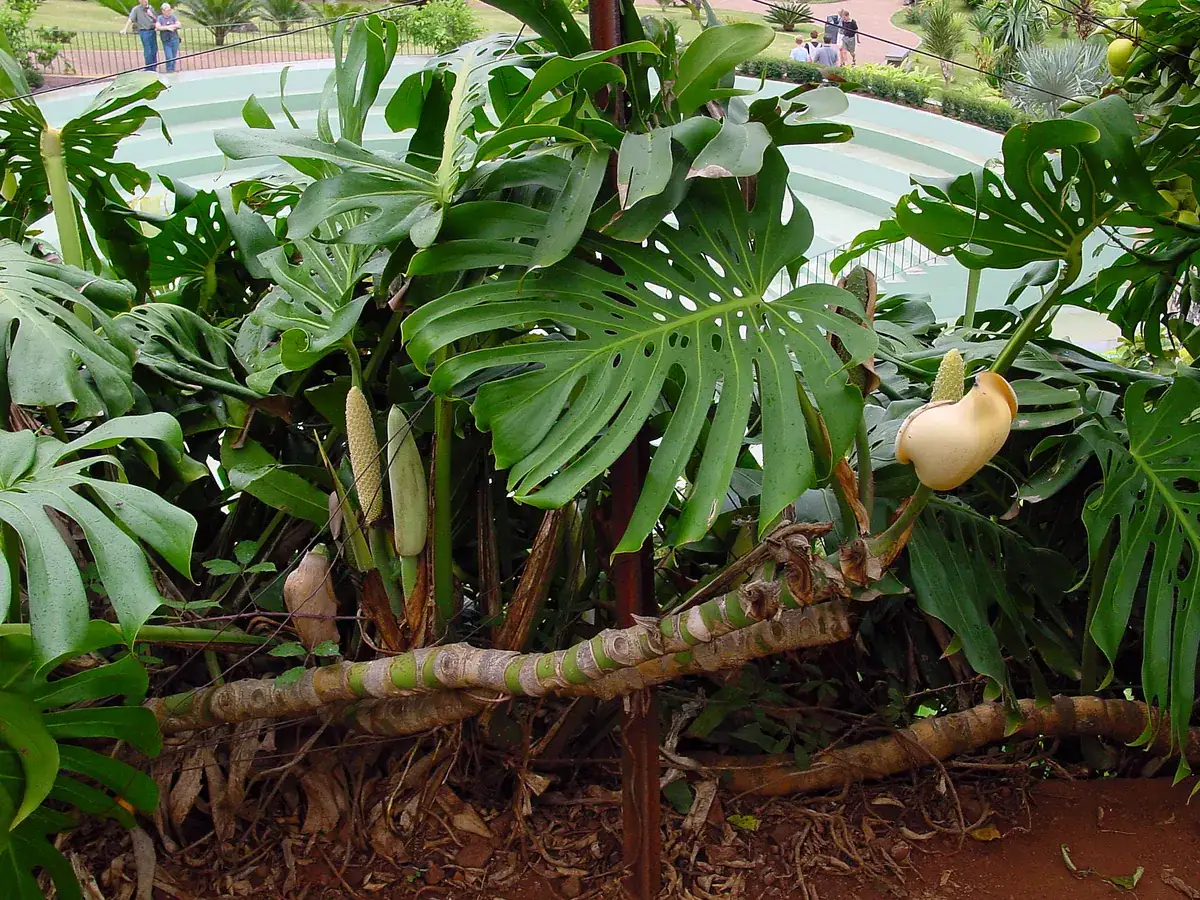
A climbing aroid from the rainforests of southern Mexico and Guatemala, grown for its huge glossy leaves that split and develop holes as the plant matures. Indoors it becomes a large, sculptural plant that wants a support pole and plenty of bright, filtered light.
Light
Bright IndirectWatering
WeeklyDifficulty
EasyPets
Toxic to cats and dogsHeight indoors
1-3 m
Growth
Fast
Temperature
18-29 °C
Not below 12 °C
Humidity
50% - 70%
Likes humid air
Soil pH
5.5-7.0
Slightly acidic soil
Native to
- Mexico
- Guatemala
Through the year
Water when the top 5 cm of soil are dry; in winter that is usually every 2 to 3 weeks.
-
Spring
WeeklyMain growing season: repot if roots circle the pot and start feeding.
-
Summer
WeeklyWater more often and keep it out of hot afternoon sun through glass.
-
Autumn
Every 2 weeksStop fertilizing and let the soil dry a little more between waterings.
-
Winter
Every 2 weeksKeep it away from cold drafts and radiators and water sparingly.
Feeding
Every 4 weeks in spring and summer. Balanced liquid fertilizer at half strength. Do not feed in winter.
Care tips
-
Give it something to climb
A moss or coir pole makes the plant produce bigger leaves with more splits.
-
Keep the leaves clean
Wipe them every few weeks so dust does not block light.
-
Repot every 2 to 3 years
Do it in spring, into a chunky, well-draining aroid mix one size up.
-
Prune and propagate
Cut leggy stems just below a node; the cutting roots easily in water.
Common problems
-
Yellowing lower leaves
What you seeLeaves turn yellow from the base of the plant while the soil stays wet.
What to doLet the top of the soil dry out before watering again and make sure the pot drains freely.
-
Leaves without splits
What you seeNew leaves come out small and solid, with no holes.
What to doMove the plant closer to a bright window, out of direct midday sun, and give it a moss pole to climb.
-
Spider mites
What you seeFine webbing and pale speckles on the undersides of the leaves.
What to doWipe both sides of every leaf, shower the plant and treat with insecticidal soap until no mites remain.
Pets
Is monstera safe for cats and dogs?
Toxic to cats and dogs. Contains insoluble calcium oxalate crystals; chewing causes mouth irritation, drooling and vomiting.
Good to know
-
The ripe fruit is edible and tastes like a mix of pineapple and banana, but unripe fruit irritates the mouth.
-
Young plants have solid, heart-shaped leaves; the holes only appear as the plant matures.