Greenie Get the app
Rubber plant care
Ficus elastica · Moraceae
Also called Rubber tree, India rubber fig, Indian rubber plant.
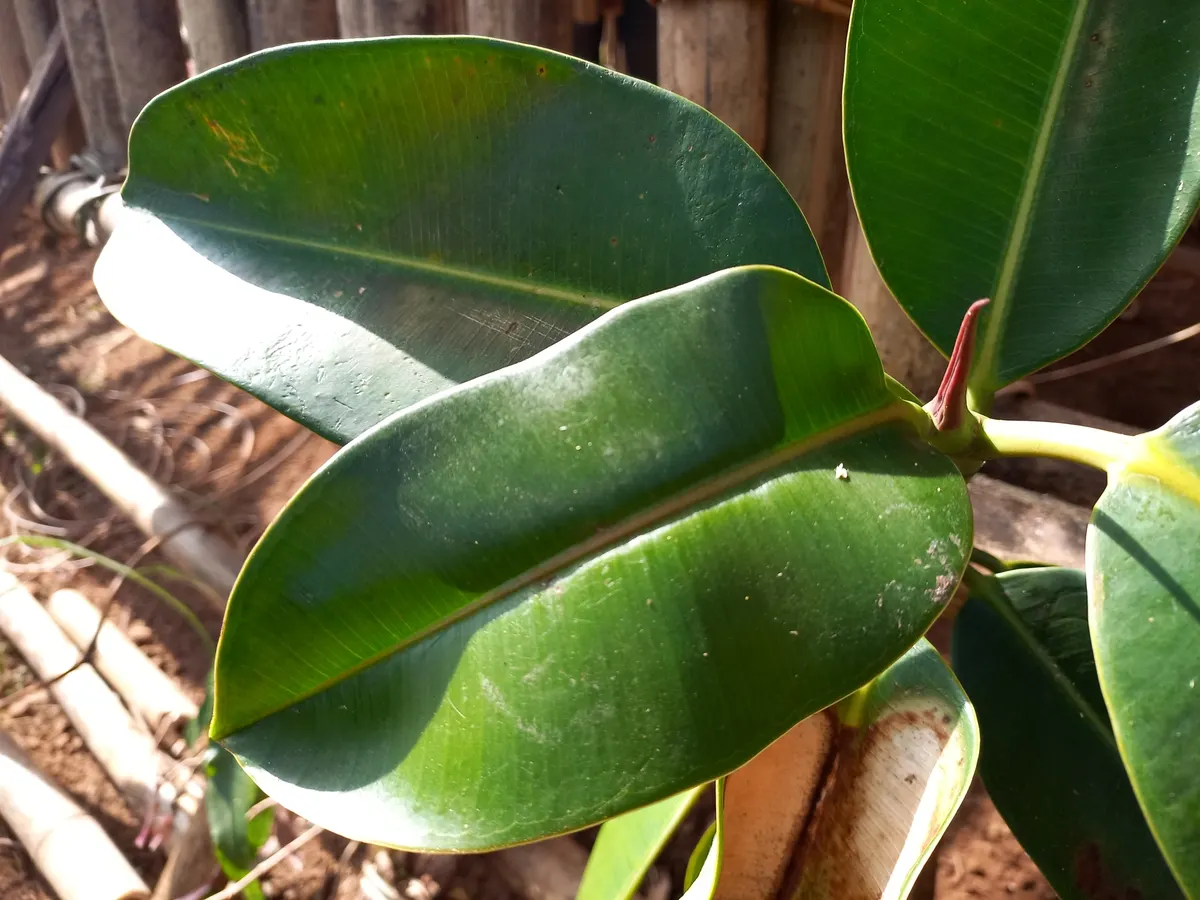
A fig tree native from the eastern Himalayas to Sumatra and Java, grown indoors for its thick, glossy, leathery leaves. New leaves unfurl from a pink or red sheath at the tip of each stem. It is tougher and faster than the fiddle-leaf fig and can reach the ceiling if left unpruned.
Light
Bright IndirectWatering
WeeklyDifficulty
EasyPets
Toxic to cats and dogsHeight indoors
0.6-3 m
Growth
Fast
Temperature
16-27 °C
Not below 13 °C
Humidity
40% - 60%
Average room humidity
Soil pH
5.5-7.0
Slightly acidic soil
Native to
- India
- Bhutan
- Nepal
- Bangladesh
- China
- Myanmar (Burma)
- Thailand
- Laos
- Vietnam
- Malaysia
- Indonesia
Through the year
Water thoroughly once the topsoil feels slightly dry, then empty the saucer. Water much less from autumn to late winter.
-
Spring
WeeklyRepot if needed, prune leggy stems and start feeding.
-
Summer
WeeklyWater regularly and protect it from hot afternoon sun.
-
Autumn
Every 2 weeksStop feeding and water less as growth slows.
-
Winter
Every 2 weeksKeep it out of drafts and water only when the topsoil is dry.
Feeding
Every 4 weeks in spring and summer. Water-soluble houseplant fertilizer. Feed less often if the plant sits in low light.
Care tips
-
Prune to shape it
Cut the main stem to make it branch, or leave it unpruned for a tall, narrow tree.
-
Keep the leaves clean
Wash or wipe dusty leaves so they stay glossy and take in more light.
-
Morning sun is fine
An east window with soft morning light suits it well.
-
Repot in late winter
Move it up one size in late winter or early spring when roots fill the pot.
Common problems
-
Yellow, dropping leaves
What you seeLower leaves turn yellow and fall while the soil stays damp.
What to doLet the soil dry slightly before each watering and make sure the pot drains. Losing an occasional old leaf is normal.
-
Leaf drop after cold
What you seeSeveral leaves fall after a cold night or a spell near an open door.
What to doMove it away from drafts and cold glass and keep it above 13 °C.
-
Mealybugs
What you seeWhite, cottony clusters on stems and the undersides of leaves.
What to doWipe them off with rubbing alcohol on a cotton swab and repeat weekly until clear.
Pets
Is rubber plant safe for cats and dogs?
Toxic to cats and dogs. The ASPCA lists Ficus species, including Indian rubber plant, as toxic: the milky sap contains ficin, a protein-digesting enzyme, and ficusin, a psoralen.
Good to know
-
The milky sap was once tapped to make rubber, which gave the plant its name.
-
In the wild it starts life high on another tree and sends roots down, much like a banyan.