Greenie Get the app
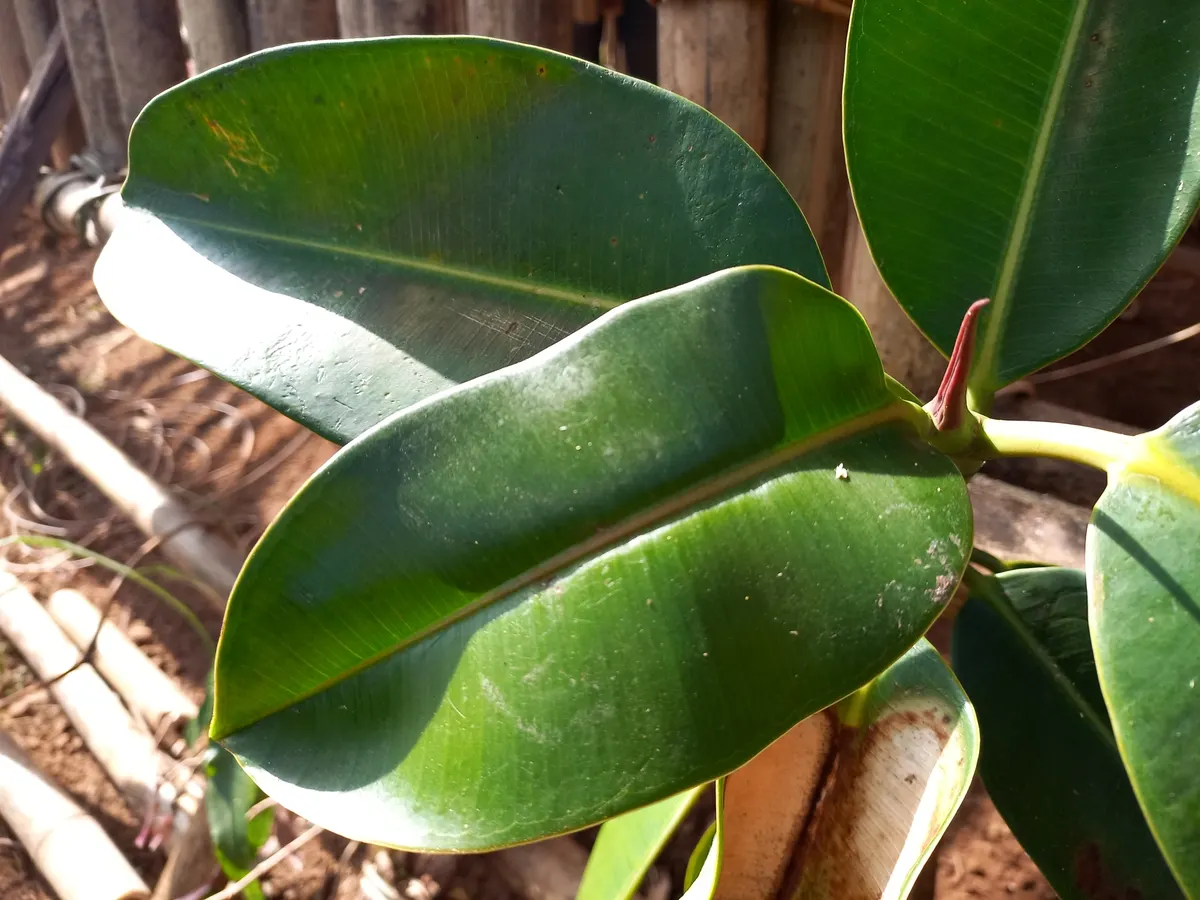
Dropping leaves · Rubber plant
Why is my rubber plant dropping leaves?
A rubber plant most often drops leaves because the soil stays too wet, or because it got cold or caught a draft. Let the topsoil dry slightly before each watering, empty the saucer, and keep it in a bright spot above 13 °C away from doors and cold glass. Losing an occasional old bottom leaf is normal.
Check these first
-
Feel the soil a few centimetres down. If it is still damp days after watering, overwatering is the most likely cause.
-
Check the pot drains and that no water sits in the saucer.
-
Think about recent cold nights, an open door or window nearby, or a move to a new spot.
-
Notice which leaves fall: yellow lower leaves point to watering or age; green leaves falling suddenly point to cold, drafts or a move.
-
Check the light: a dim corner far from a window can cause slow, steady leaf loss.
-
Look under leaves and along stems for white cottony clusters, brown bumps or fine webbing.
Causes and fixes
-
Overwatering
How to tellLower leaves turn yellow and fall while the soil stays damp. In bad cases roots turn dark and soft.
What to doWater thoroughly only when the topsoil feels slightly dry, then empty the saucer. Use a well-draining potting mix and a pot with holes. Water much less from autumn to late winter.
-
Cold or drafts
How to tellSeveral leaves, often still green, drop after a cold night, a spell near an open door or a sudden change in temperature.
What to doKeep it between 16 and 27 °C and never below 13 °C. Move it away from outside doors, cold windows and air-conditioning vents.
-
Too little light
How to tellLeaves drop slowly over weeks, new leaves come out smaller and stems stretch toward the window.
What to doMove it to bright, indirect light; an east window with soft morning sun suits it. Avoid hot afternoon sun.
-
Moving or dry soil and air
How to tellLeaves fall soon after the plant was moved, or after the soil dried out completely in a warm, dry room.
What to doPick a good spot and leave it there. Water before the whole root ball dries out, and keep it away from heaters that dry the air.
-
Pests
How to tellWhite cottony clusters on stems and leaf undersides, small brown bumps, sticky leaves or fine webbing.
What to doWipe mealybugs and scale off with rubbing alcohol on a cotton swab and repeat weekly until clear. Wash or wipe the leaves to remove mites and dust.
-
Normal ageing
How to tellOnly an occasional bottom leaf turns yellow and drops while new leaves keep coming from the tip.
What to doNothing to fix. If the stem gets bare at the bottom, you can prune the top to make it branch.
Stop it coming back
-
Let the topsoil dry slightly before every watering and empty the saucer.
-
Keep it in bright, indirect light and stop moving it once it is settled.
-
Keep it above 13 °C and away from drafts, cold glass and heaters.
-
Water much less from autumn to late winter.
-
Wipe the leaves now and then and check for pests while you do.
When to worry
When to worry
One old lower leaf yellowing and dropping now and then is normal. Worry when many leaves fall in a short time, the soil stays wet and smells sour, or the base of the stem feels soft. Unpot the plant and look at the roots: cut away any dark, mushy roots, repot into fresh well-draining mix and water lightly until new leaves appear. If cold was the cause, move it to a warmer spot away from drafts and wait for new leaves before cutting anything back.