Greenie Get the app
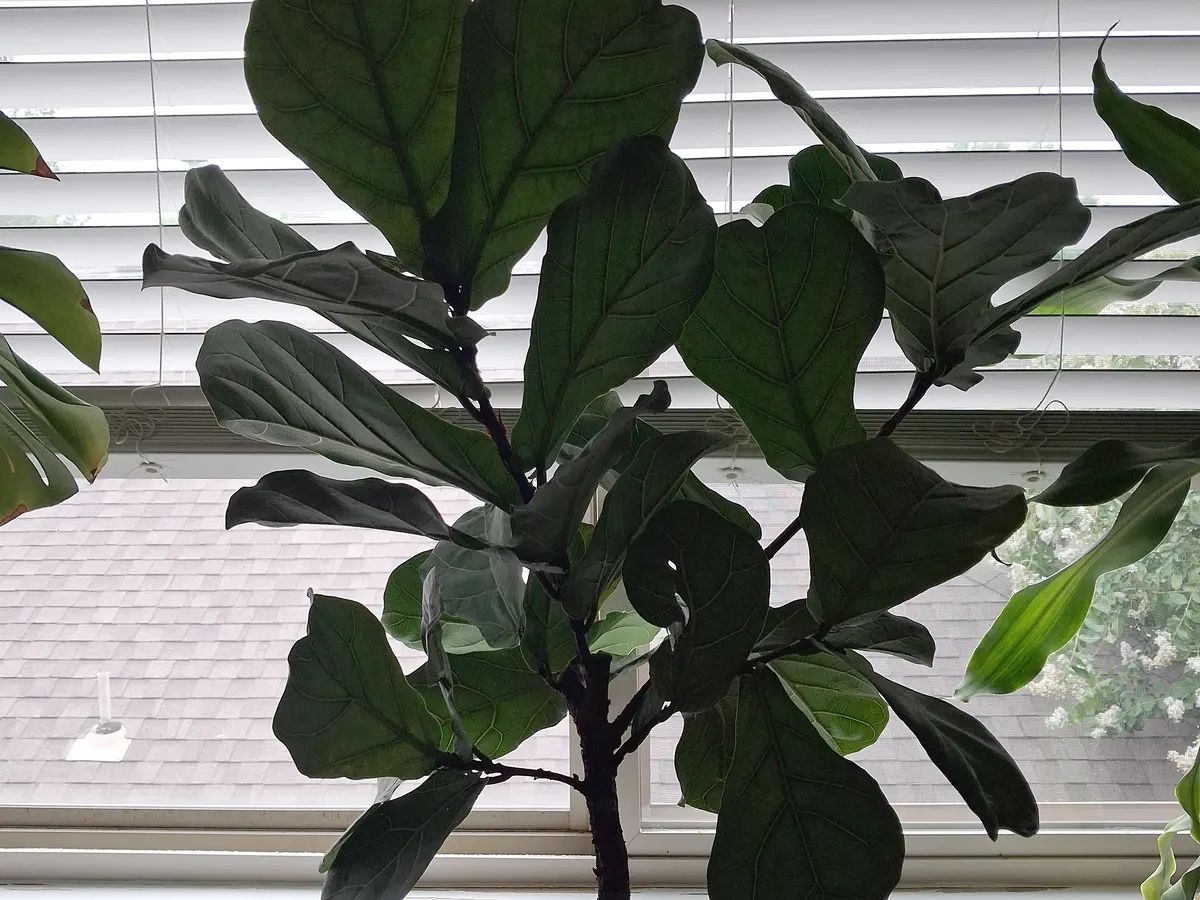
Fiddle-leaf fig care
Ficus lyrata · Moraceae
Also called Banjo fig.
A tree from the lowland forests of West and Central Africa, grown indoors for its huge, stiff leaves shaped like a violin body. In a pot it becomes a striking floor plant up to about 3 metres tall. It wants steady conditions: plenty of bright light, careful watering and no drafts.
Light
Bright IndirectWatering
WeeklyDifficulty
MediumPets
Toxic to cats and dogsHeight indoors
0.6-3 m
Growth
Moderate
Temperature
18-27 °C
Not below 13 °C
Humidity
40% - 60%
Average room humidity
Soil pH
5.5-7.0
Slightly acidic soil
Native to
- Benin
- Cameroon
- Côte d’Ivoire
- Gabon
- Ghana
- Guinea
- Guinea-Bissau
- Liberia
- Nigeria
- Sierra Leone
- Togo
Through the year
Water thoroughly when the top 3 to 5 cm of soil are dry and empty the saucer. Cut back from autumn to late winter.
-
Spring
WeeklyRepot if roots fill the pot and start feeding.
-
Summer
WeeklyWater more often and shield it from hot afternoon sun.
-
Autumn
Every 2 weeksStop feeding and let the soil dry a little more between waterings.
-
Winter
Every 2 weeksKeep it away from cold drafts and heaters and water sparingly.
Feeding
Every 4-6 weeks in spring and summer. Balanced liquid fertilizer at half strength. Do not feed in winter.
Care tips
-
Don't move it around
It reacts to changes in light and temperature by dropping leaves.
-
Turn it now and then
A quarter turn every few weeks keeps it from leaning toward the window.
-
Wear gloves when pruning
The milky sap can irritate skin.
-
Clean the leaves
Wipe the big leaves with a damp cloth so dust does not cut the light they get.
Common problems
-
Leaf drop
What you seeHealthy-looking leaves fall suddenly, often after a move.
What to doKeep it in one bright spot away from heaters, air conditioning and doors, and water on a steady routine.
-
Brown spots
What you seeDark brown patches spread from the leaf edges or centre.
What to doCheck that the pot drains and let the topsoil dry before watering; overwatering is the usual cause.
-
Scale insects
What you seeSmall brown bumps on stems and leaf veins with sticky residue below.
What to doScrape them off and wipe the area with rubbing alcohol, repeating until they stop returning.
Pets
Is fiddle-leaf fig safe for cats and dogs?
Toxic to cats and dogs. The ASPCA lists Ficus species as toxic: the milky sap contains ficin, a protein-digesting enzyme, and ficusin, a psoralen.
Good to know
-
In its native forests it grows into a tree 18 to 30 metres tall.
-
The species name lyrata means lyre-shaped, after the outline of the leaf.