Greenie Get the app
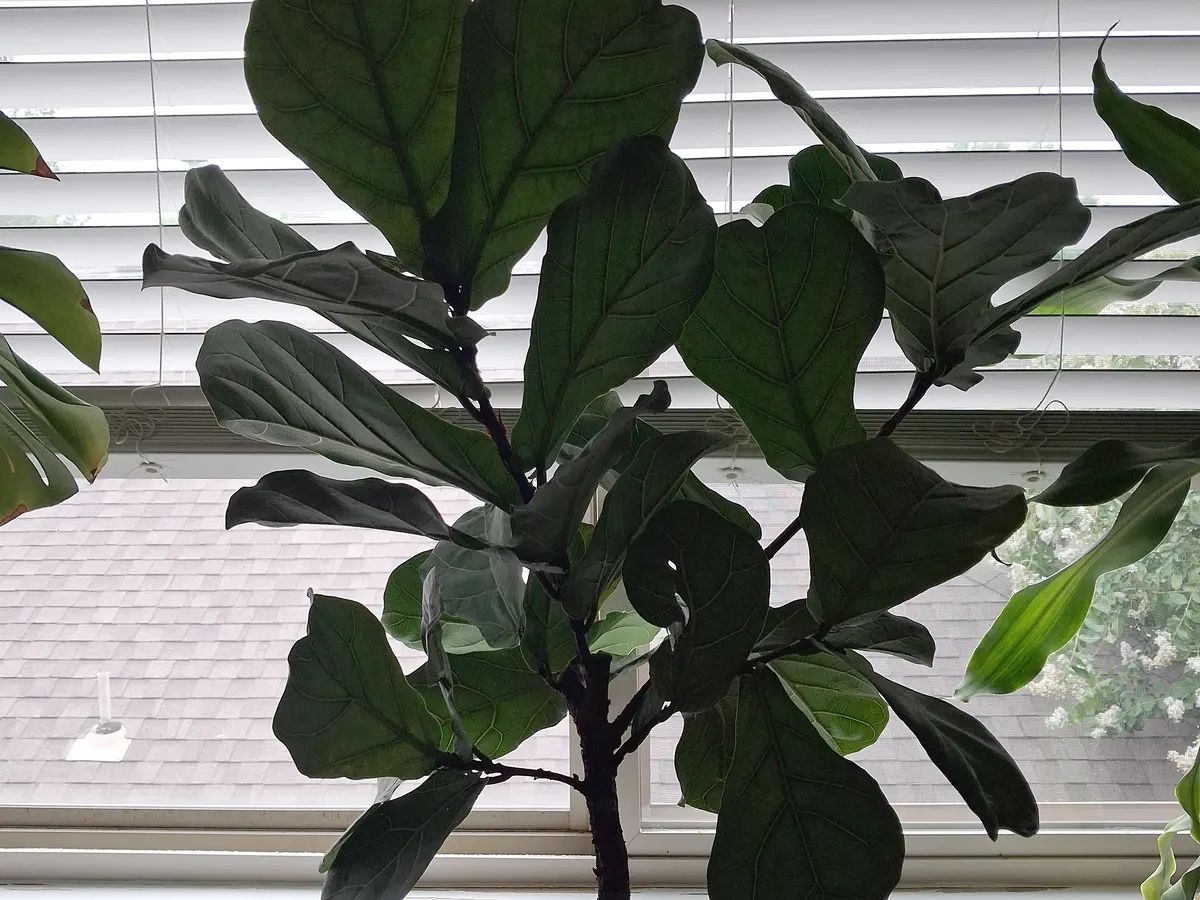
Brown spots · Fiddle-leaf fig
Why does my fiddle leaf fig have brown spots?
Brown patches on a fiddle leaf fig usually come from one of two things: roots that stay too wet, or swings in temperature from a nearby heating or cooling vent. Let the top 3 to 5 cm of soil dry before you water, empty the saucer every time, and move the plant away from vents and radiators. A cold window or hot direct sun can also mark the leaves.
Check these first
-
Push a finger 3 to 5 cm into the soil. If it is still damp days after watering, overwatering is the likely cause.
-
Lift the pot and look at the drainage holes and saucer: standing water or a pot without holes keeps the roots wet.
-
Look at where the spots are: brown patches in the middle of leaves while the soil stays wet point to the roots, dry pale patches on leaves facing the window point to sun, and spots on the side facing a vent point to temperature swings.
-
Check whether the plant has been near cold glass, an open door or a heater recently.
-
Look closely at a spot: a yellow ring around it, or many small spots that merge, suggests a leaf-spot disease.
-
If spots keep appearing, slide the plant out of its pot: healthy roots are firm and pale, rotting roots are dark and soft.
Causes and fixes
-
Overwatering and root rot
How to tellBrown patches, often in the middle of the leaf rather than at the edge, while the soil stays wet. The plant may also drop leaves, and the roots look dark and soft.
What to doWater only when the top 3 to 5 cm of soil are dry, water thoroughly and empty the saucer. Use a pot with drainage holes. If roots are rotten, cut them back to firm tissue and repot into fresh, well-draining potting mix. Water less from autumn to late winter.
-
Heating or cooling vents and drafts
How to tellSpots appear after the heating or air conditioning comes on, often on the side of the plant facing the vent, door or radiator.
What to doMove the plant to a bright spot away from vents, radiators, air conditioners and outside doors, then leave it there. Keep it between 18 and 27 °C.
-
Cold damage
How to tellDark, wet-looking spots that appear after a cold night or after leaves touched a cold window, sometimes followed by heavy leaf drop.
What to doKeep the plant above 13 °C and away from cold glass and winter drafts. Damaged leaves will not recover, but new growth will be clean once it is warm.
-
Sun scorch
How to tellPale tan or brown, dry patches on the leaves that face the window or get direct afternoon sun. The rest of the plant looks healthy and the soil is normal.
What to doGive it bright, indirect light and shield it from hot afternoon sun with a sheer curtain or by moving it back from the glass. If you move it outdoors for summer, introduce it to brighter light gradually.
-
Leaf-spot disease
How to tellSpots with a yellow halo, or many small spots that grow and merge, often where water sat on the leaves.
What to doRemove badly spotted leaves, water the soil rather than the leaves and keep leaves dry. Give the plant room for air to move around it.
Stop it coming back
-
Check the soil before every watering and water only when the top few centimetres are dry.
-
Use a pot with drainage holes and never leave water in the saucer.
-
Pick one bright spot out of direct afternoon sun and away from vents, then stop moving it.
-
Water less from autumn to late winter, when growth slows.
-
Wipe the leaves with a damp cloth now and then and check them for spots and pests while you do.
When to worry
When to worry
One or two spots on an old leaf after a move or a cold snap are not serious; the leaf will not heal, but you can remove it once it looks bad. Worry when new spots keep appearing on several leaves, leaves drop as well, or the soil smells sour and stays wet. That points to root rot: unpot the plant, cut away dark, soft roots, repot into fresh mix in a pot that drains, and water sparingly until it starts growing again.