Greenie Get the app
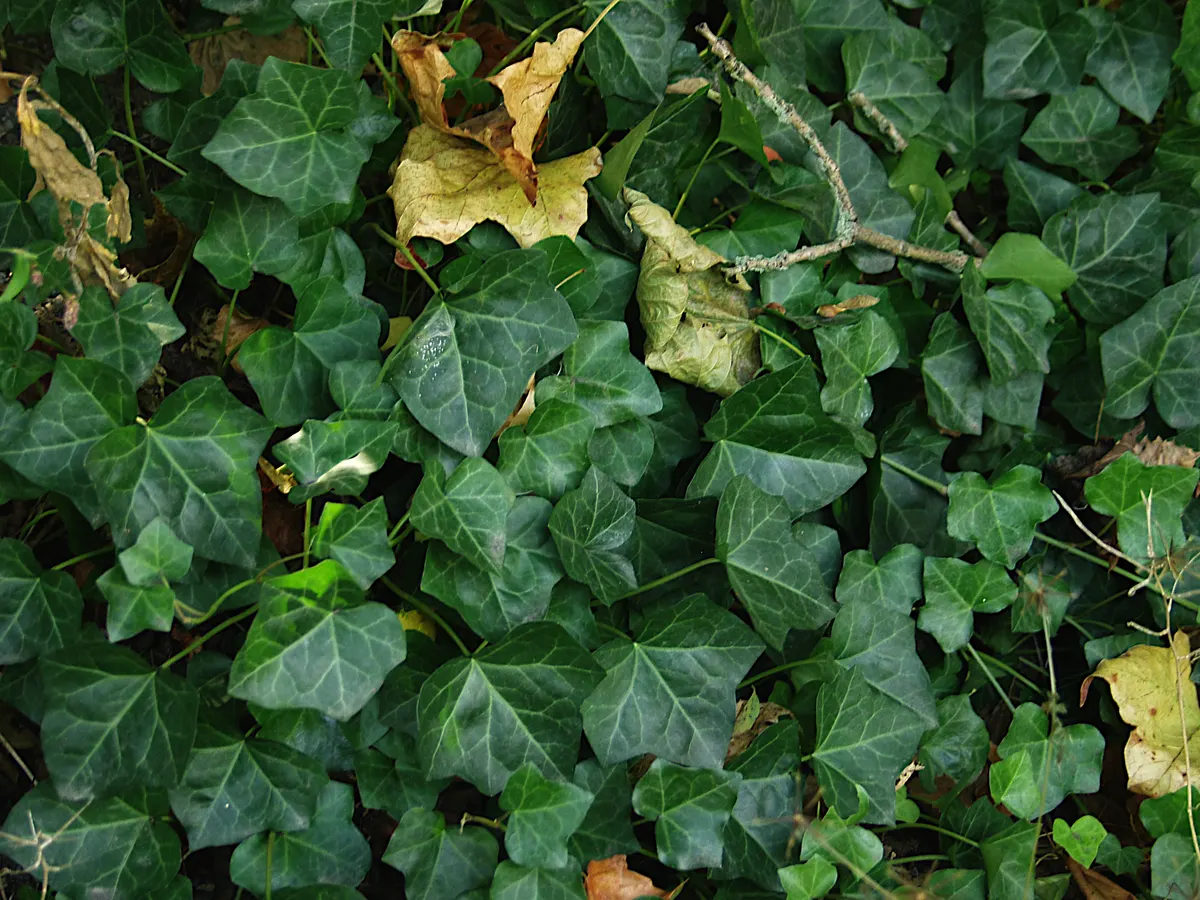
English ivy care
Hedera helix · Araliaceae
Also called Common ivy, European ivy.
An evergreen climber native to Europe that clings with tiny aerial roots and trails gracefully from shelves and hanging pots indoors. It prefers cooler rooms than most houseplants and bright, indirect light. Outdoors it can be invasive in parts of North America, so grow it in a pot there.
Light
Bright IndirectWatering
WeeklyDifficulty
MediumPets
Toxic to cats and dogsHeight indoorsUnconfirmed
0.3-2 m
Growth
Fast
TemperatureUnconfirmed
10-21 °C
Not below 0 °C
HumidityUnconfirmed
40% - 60%
Average room humidity
Soil pH
6.0-7.5
Neutral soil
Native to
- United Kingdom
- Ireland
- France
- Belgium
- Luxembourg
- Netherlands
- Germany
- Denmark
- Norway
- Sweden
- Poland
- Czechia
- Slovakia
- Austria
- Switzerland
- Hungary
- Romania
- Bulgaria
- Greece
- Albania
- Slovenia
- Croatia
- Bosnia & Herzegovina
- Serbia
- Montenegro
- North Macedonia
- Italy
- Malta
- Spain
- Portugal
- Estonia
- Latvia
- Lithuania
- Belarus
- Ukraine
- Russia
- Türkiye
- Moldova
Through the year
Water when the top 2 cm of soil are dry; keep it slightly drier in winter.
-
Spring
WeeklyTrim back long trails and start feeding.
-
Summer
WeeklyKeep it out of hot sun and check often for mites.
-
Autumn
WeeklyStop feeding and water a little less.
-
Winter
Every 2 weeksKeep it cool and away from heating vents; water when the surface dries.
Feeding
Every 4 weeks in spring and summer. Balanced liquid fertilizer at half strength. Do not feed in winter.
Care tips
-
Keep it cool
It does best in a cool room and suffers next to radiators.
-
Pinch the tips
Cut back long stems to keep it full; the cuttings root easily in water.
-
Give variegated forms more light
Cream and gold leaves fade to green in dim spots.
-
Rinse the foliage
A regular shower keeps leaves clean and discourages mites.
Common problems
-
Spider mites
What you seeLeaves look dull and speckled, with fine webbing between stems.
What to doShower the plant often, keep it cool and humid, and treat with insecticidal soap.
-
Aphids
What you seeClusters of small green or black insects on soft new shoots.
What to doRinse them off or pinch out the affected tips and treat with insecticidal soap.
-
Leaf spots
What you seeBrown or black spots spread across the leaves.
What to doRemove spotted leaves and water at the soil line instead of over the foliage.
Pets
Is english ivy safe for cats and dogs?
Toxic to cats and dogs. Contains triterpenoid saponins (hederagenin); eating the leaves causes vomiting, abdominal pain, drooling and diarrhoea.
Good to know
-
It has two growth stages: climbing stems with lobed leaves, and mature shrubby stems with unlobed leaves that flower and fruit.
-
Ivy is a major food plant for British wildlife: over 140 kinds of insect and 17 kinds of bird eat it.