Greenie Get the app
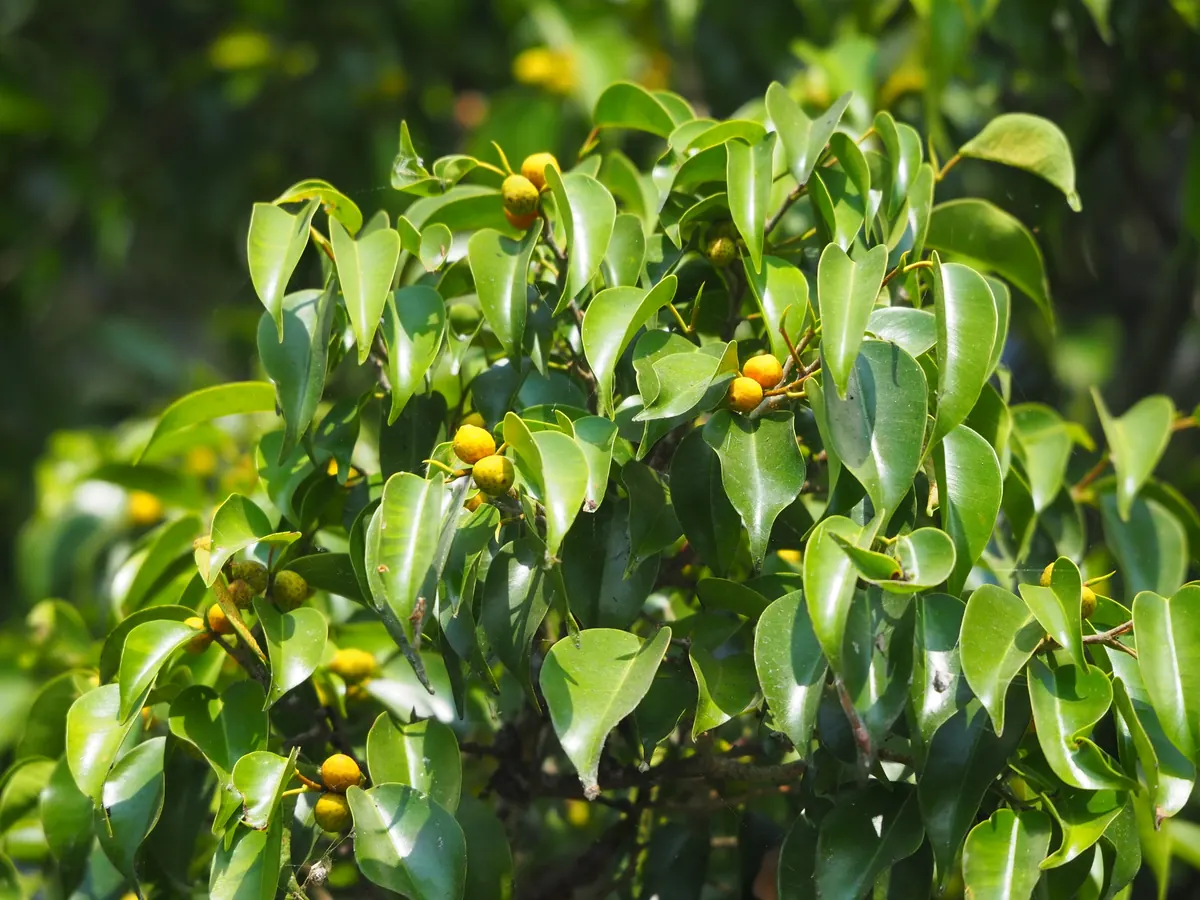
Weeping fig care
Ficus benjamina · Moraceae
Also called Benjamin fig, Ficus tree, Java fig.
A tropical fig tree from South and Southeast Asia to northern Australia, grown indoors for its arching branches and small, glossy, pointed leaves. In a pot it is kept between about 0.6 and 3 m and is often sold with braided trunks. It grows well in bright light but drops leaves quickly when its conditions change.
Light
Bright IndirectWatering
WeeklyDifficulty
MediumPets
Toxic to cats and dogsHeight indoors
0.6-3 m
Growth
Moderate
TemperatureUnconfirmed
18-29 °C
Not below 13 °C
HumidityUnconfirmed
40% - 60%
Average room humidity
Soil pHUnconfirmed
6.0-7.0
Slightly acidic soil
Native to
- Australia
- Bangladesh
- Brunei
- Bhutan
- China
- Indonesia
- India
- Cambodia
- Laos
- Myanmar (Burma)
- Malaysia
- Nepal
- Philippines
- Papua New Guinea
- Solomon Islands
- Thailand
- Timor-Leste
- Taiwan
- Vietnam
Through the year
From spring to late summer, water often enough that the pot never fully dries out; in winter, wait until the surface feels dry first. Empty the saucer after every watering.
-
Spring
WeeklyRepot if needed and start feeding again as new shoots appear.
-
Summer
WeeklyKeep the soil evenly moist; it can go outside in morning sun and afternoon shade.
-
Autumn
Every 2 weeksBring it in before nights get cold and expect a few leaves to drop as it adjusts.
-
Winter
Every 2 weeksWater less, keep it away from heaters and drafts, and do any shaping now.
Feeding
Every 4-8 weeks in spring and summer. Liquid houseplant fertilizer during the growing season. No feeding in winter.
Care tips
-
Do not move it around
It drops leaves after almost any change in light or temperature, including the trip home from the shop.
-
Rinse the leaves now and then
Washing off dust with warm water keeps the leaves clean and helps against mites.
-
Prune to shape
It handles trimming, even hard pruning, which is best done in late autumn or winter.
-
Repot only when crowded
It tolerates being a little root-bound; repot in late winter or early spring when new leaves come out small.
Common problems
-
Leaf drop
What you seeGreen or yellow leaves fall in large numbers.
What to doFind one bright spot and leave it there, away from drafts, heat vents and cold glass, and water on a steady routine. It usually settles and regrows.
-
Spider mites and scale
What you seeSpeckled, dull leaves, fine webbing or small brown bumps on stems.
What to doWash the foliage with lukewarm water, scrape off scale and treat with insecticidal soap or horticultural oil.
-
Root rot
What you seeLeaves yellow and drop while the soil stays wet.
What to doLet the top of the soil dry before watering and repot into a fresh, free-draining mix if the roots are dark and soft.
Pets
Is weeping fig safe for cats and dogs?
Toxic to cats and dogs. The ASPCA lists Ficus benjamina as toxic: the sap contains ficin, a protein-digesting enzyme, and ficusin, a psoralen, which irritate the gut and skin.
Good to know
-
Young stems are flexible enough to be braided or twisted together, which is how the plaited trunks are made.
-
Outdoors in the tropics it becomes a tree up to about 15 m tall.
-
It almost never fruits indoors, partly because the tiny wasps that pollinate figs are missing.