Greenie Get the app
Drooping or falling leaves · Snake plant
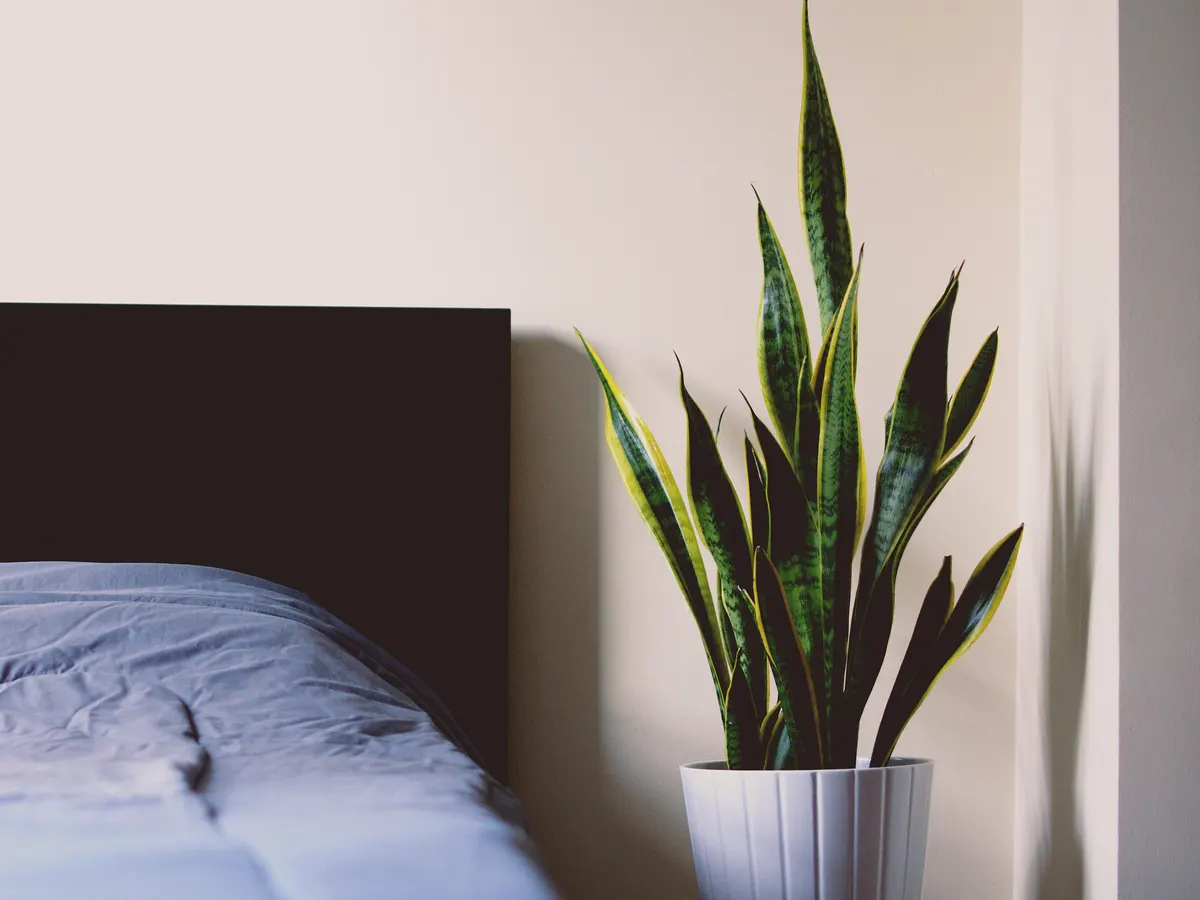
Why is my snake plant drooping or falling over?
A snake plant that droops or falls over has most often been overwatered: the roots and the base of the leaves rot, so the leaves go soft and can no longer stand up. Stop watering, check the roots, cut away anything mushy and repot into dry, fast-draining cactus mix, then water only once the soil has dried out completely. If the base is firm, the cause is more likely low light, a pot too light for a tall plant, or cold.
Check these first
-
Look at the pattern: is the whole plant leaning or collapsing, or are just a few long leaves bending over? Whole-plant leaning points to the roots.
-
Press the base of the drooping leaves. Soft, yellow or mushy tissue at soil level means rot; firm, green bases rule it out.
-
Push a finger deep into the soil. A snake plant should be watered only when the mix is dry all the way through.
-
If the base is soft or the soil is wet, ease the plant out of its pot. Healthy roots are firm and pale; brown or black, soft roots are rotten.
-
Check the light. Plants in dim corners grow long, thin leaves that flop under their own weight.
-
Think about the temperature: a cold window, an unheated room or a cold draft in winter can make leaves droop and collapse.
Causes and fixes
-
Overwatering and root rot
How to tellLeaves turn soft, yellow or mushy at the base and fall over, often several at once, while the soil stays damp. The whole plant may wobble or lean in the pot.
What to doUnpot the plant, cut off rotten leaves and any brown, soft roots, and repot the healthy parts into dry, free-draining cactus mix in a pot with drainage holes, only slightly larger than the root ball. Wait until the mix is fully dry before watering, and keep water out of the centre of the rosette.
-
Too little light
How to tellIndividual leaves grow tall, thin and pale and bend or flop outward, while the base stays firm and the roots are healthy.
What to doMove the plant to a bright spot with indirect light, out of hot afternoon sun. Tie floppy leaves loosely to a cane or a ring support, and give the pot a partial turn at each watering so it does not lean toward the window.
-
Top-heavy plant in a light pot
How to tellThe whole plant tips over, usually when the soil is dry, but leaves and roots are firm and healthy.
What to doRepot into a heavy clay pot that is wider than it is tall, or stand the pot inside a heavier one. A snug pot is fine; snake plants do not mind being slightly crowded.
-
Cold damage
How to tellLeaves droop, go soft or darken soon after a cold night, a spell against a cold window, or time in an unheated room.
What to doMove the plant to a warm room away from cold glass and drafts, keep the soil on the dry side while it recovers, and cut off leaves that have collapsed at the base.
-
Very long drought
How to tellThe soil has been bone dry for a long time and leaves look wrinkled or puckered rather than smooth and plump; the base is firm, not mushy.
What to doWater thoroughly, let the pot drain fully and pour away any water in the saucer. Then go back to watering whenever the mix has dried right through, roughly every 2 weeks in spring and summer and every month or two in winter.
Stop it coming back
-
Water only when the soil is dry all the way through, and very little in winter.
-
Use a cactus mix or a mix with extra perlite in a pot with drainage holes.
-
Choose a heavy, wide pot for tall plants.
-
Give it bright, indirect light; it tolerates shade but grows floppier there.
-
Keep it away from cold windows and drafts in winter.
When to worry
When to worry
One or two old leaves bending in a dim room is a light problem and easy to fix with a brighter spot and a little support. It is serious when many leaves turn soft and mushy at the base or the plant comes loose in the pot: that is root rot, and it spreads through the rhizome if you wait. Unpot it at once and remove all rotten tissue. If only a few healthy sections remain, pot them separately as divisions, or cut firm, healthy leaves into 5 cm pieces, let the cut ends dry for a day or two, and push them bottom end down into barely moist, gritty mix.