Greenie Get the app
Aloe vera care
Aloe vera · Asphodelaceae
Also called Medicinal aloe, Barbados aloe, Burn plant.
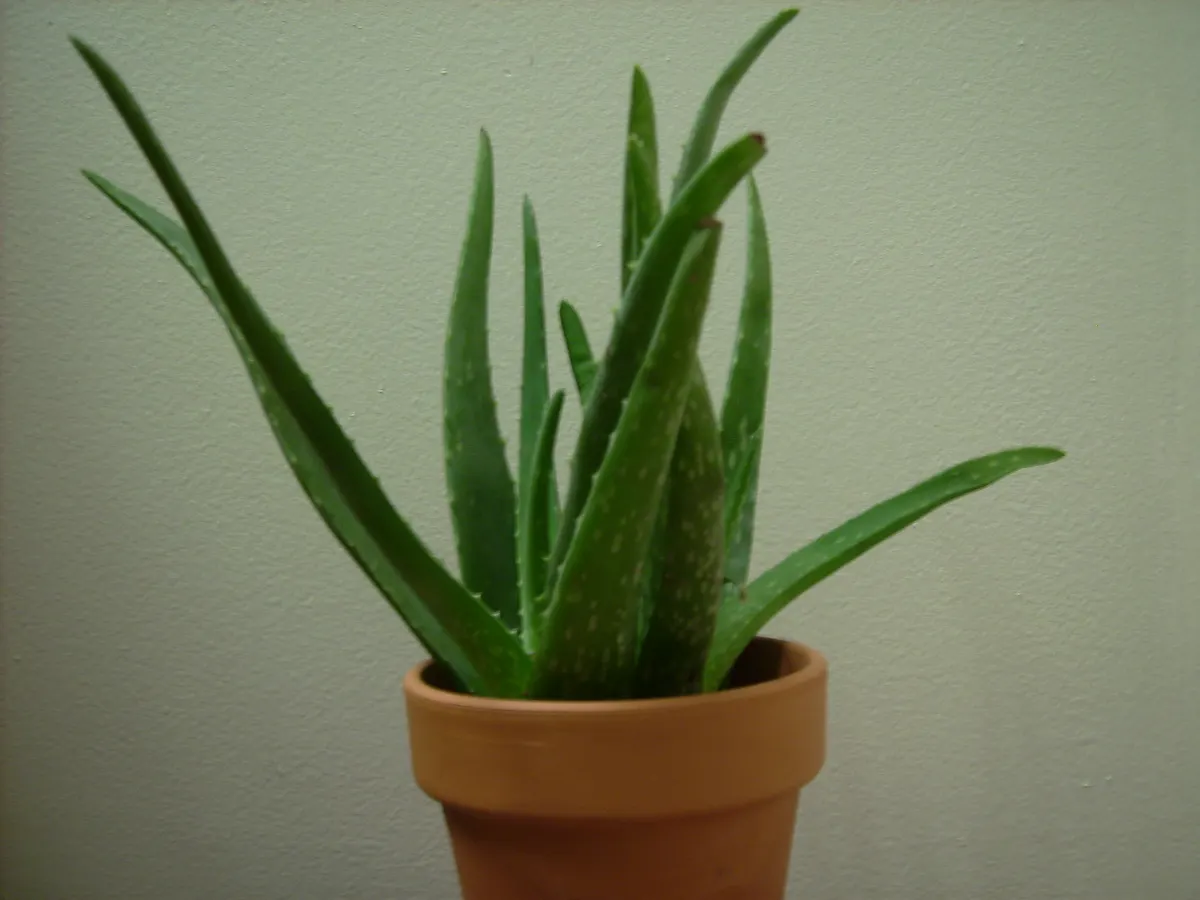
A stemless succulent with thick, toothed leaves in a rosette, known for the clear gel inside each leaf. Its wild home is the Arabian Peninsula, but people have spread it across warm regions worldwide. Indoors it wants the sunniest window you have and very little water.
Light
Full SunWatering
Every 2 weeksDifficulty
EasyPets
Toxic to cats and dogsHeight indoors
30-60 cm
Growth
Moderate
TemperatureUnconfirmed
13-27 °C
Not below 5 °C
Humidity
30% - 50%
Fine in dry rooms
Soil pH
6.0-7.5
Neutral soil
Native to
- Oman
Through the year
Water deeply only when the soil has dried out completely; in winter, once a month or less is enough.
-
Spring
Every 2 weeksGrowth restarts: water a little more often and repot if offsets crowd the pot.
-
Summer
Every 2 weeksGive it full sun and water when the soil is dry; outdoors, keep it out of heavy rain.
-
Autumn
MonthlyCut back watering and bring it inside before the nights turn cold.
-
Winter
MonthlyKeep it in the brightest spot, away from radiators, and water very little.
Feeding
Every 4 weeks in spring and summer. Cactus or balanced liquid fertilizer at half strength from late spring to late summer. Do not feed in autumn or winter.
Care tips
-
Use a gritty mix
Cactus compost, or regular potting soil mixed with plenty of grit or perlite.
-
Pick a terracotta pot
Clay dries out faster than plastic and its weight stops a top-heavy plant from tipping over.
-
Separate the pups
Offsets that appear at the base can be pulled off in spring and potted on their own.
-
Harvest from the outside
Cut outer leaves close to the base; new leaves keep coming from the centre.
-
Move it outside slowly
It can spend summer outdoors out of heavy rain; bring it in before nights drop below 10 °C.
Common problems
-
Soft, mushy leaves
What you seeLeaves turn translucent and collapse at the base while the soil stays damp.
What to doUnpot the plant, cut away dark, soft roots, let it dry for a few days and replant in dry cactus mix in a pot with a drainage hole.
-
Thin, floppy leaves
What you seeLeaves grow long and pale and bend outward instead of standing upright.
What to doMove it to a south- or west-facing window where it gets several hours of direct sun.
-
Mealybugs and scale
What you seeWhite cottony tufts or small brown bumps where the leaves meet the base.
What to doDab them off with a cotton swab dipped in rubbing alcohol and check again every week.
Pets
Is aloe vera safe for cats and dogs?
Toxic to cats and dogs. Contains saponins and anthraquinones; chewing the leaves can cause vomiting, diarrhea and lethargy. The clear inner gel is considered edible.
Good to know
-
People have grown it for its gel for more than two thousand years.
-
The yellow latex just under the skin is a strong laxative if swallowed and can irritate skin, so only the clear inner gel is used.
-
Mature plants in strong light send up a tall spike of tubular yellow flowers, but this is rare indoors.