Greenie Get the app
Bird of paradise care
Strelitzia reginae · Strelitziaceae
Also called Crane flower, Bird's tongue flower.
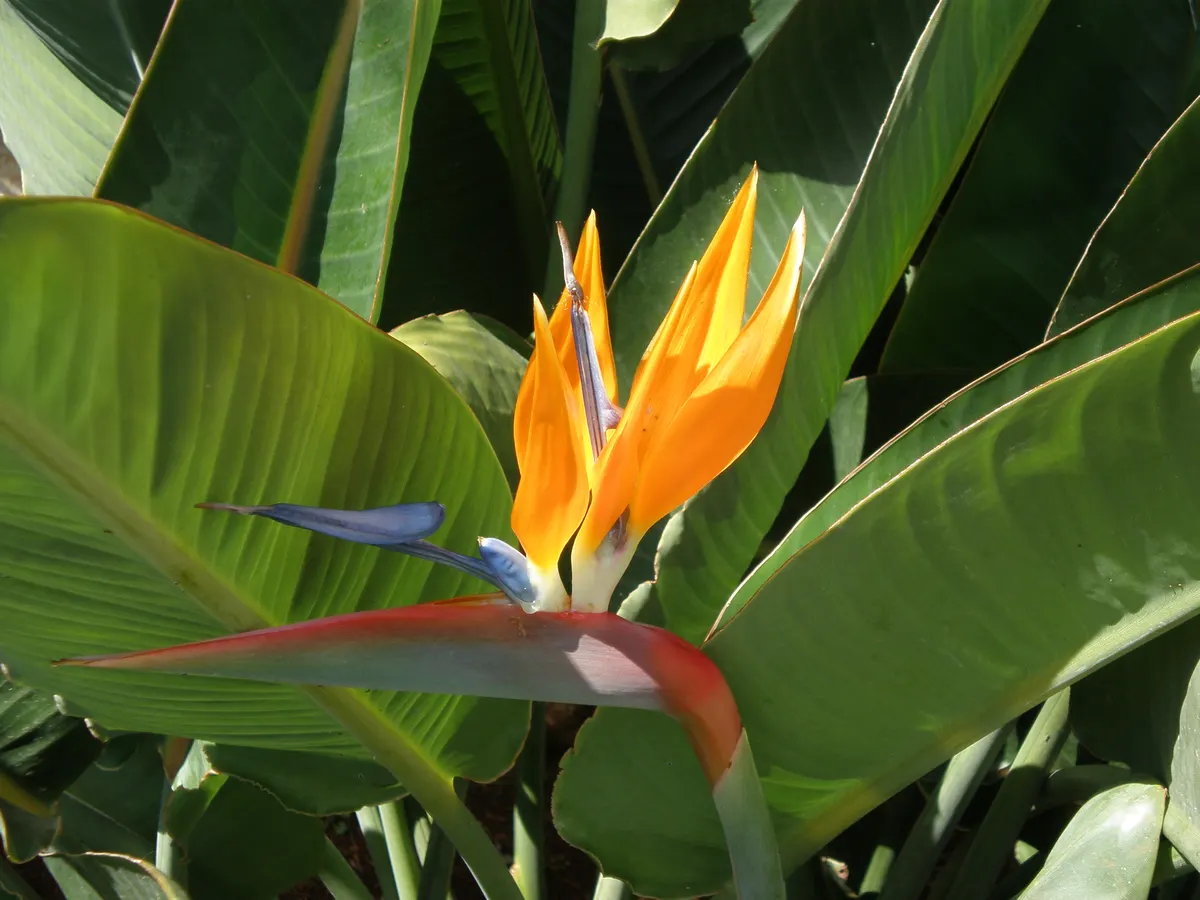
A clumping perennial from the coast of eastern South Africa with large, paddle-shaped grey-green leaves. Its orange and blue flowers emerge from a beak-shaped bract and look like the head of a bird. Indoors it needs the sunniest spot available and several years of growth before it blooms.
Light
Full SunWatering
WeeklyDifficulty
MediumPets
Toxic to cats and dogsHeight indoors
1-1.5 m
Growth
Moderate
TemperatureUnconfirmed
18-27 °C
Not below 10 °C
Humidity
40% - 60%
Average room humidity
Soil pH
6.0-7.5
Neutral soil
Native to
- South Africa
Through the year
From spring to autumn, water generously when the top few centimetres of soil are dry; in winter, let it dry out more between waterings.
-
Spring
WeeklyStart feeding, repot or divide if needed, and move it to the sunniest spot.
-
Summer
WeeklyWater freely and give it full sun, outdoors if possible; mature plants can flower on and off through the year.
-
Autumn
Every 2 weeksBring it in before nights get cold and start watering less.
-
Winter
Every 2 weeksKeep it bright with cool nights around 13 to 18 °C, water sparingly and do not feed.
Feeding
Every 4 weeks in spring and summer. Balanced liquid fertilizer through spring and summer. Do not feed in winter.
Care tips
-
Splits in the leaves are normal
Air movement and handling tear the leaves along their veins; it does not harm the plant.
-
Leave it a bit crowded
It flowers better slightly pot-bound; repot about every second year in spring.
-
Divide large clumps
In spring, cut off a section with its own roots and leaves and pot it separately.
-
Summer outside
Once outdoor temperatures stay above 20 °C, it can go to a sunny, sheltered spot with good air flow.
Common problems
-
No flowers
What you seeThe plant keeps making leaves but never blooms.
What to doGive it several hours of direct sun, feed it regularly from spring to summer and leave it slightly pot-bound.
-
Root rot
What you seeLeaves turn yellow and droop while the soil stays wet.
What to doLet the soil dry more between waterings and make sure the pot drains freely.
-
Scale and mealybugs
What you seeBrown bumps or white fluff on leaf stalks and undersides.
What to doWipe them off with a cloth dampened with rubbing alcohol and repeat weekly until they are gone.
Pets
Is bird of paradise safe for cats and dogs?
Toxic to cats and dogs. Contains gastrointestinal irritants, mostly in the fruit and seeds; eating them can cause nausea, vomiting and drowsiness. Not to be confused with Caesalpinia gilliesii, also sold as bird of paradise, which is more toxic.
Good to know
-
Its genus honours Queen Charlotte of Mecklenburg-Strelitz, wife of George III; reginae means of the queen.
-
Sunbirds perch on the blue arrow-shaped petals to reach the nectar; their weight splits them open and coats their feet with pollen.
-
Each beak-shaped bract releases several flowers one after another.