Greenie Get the app
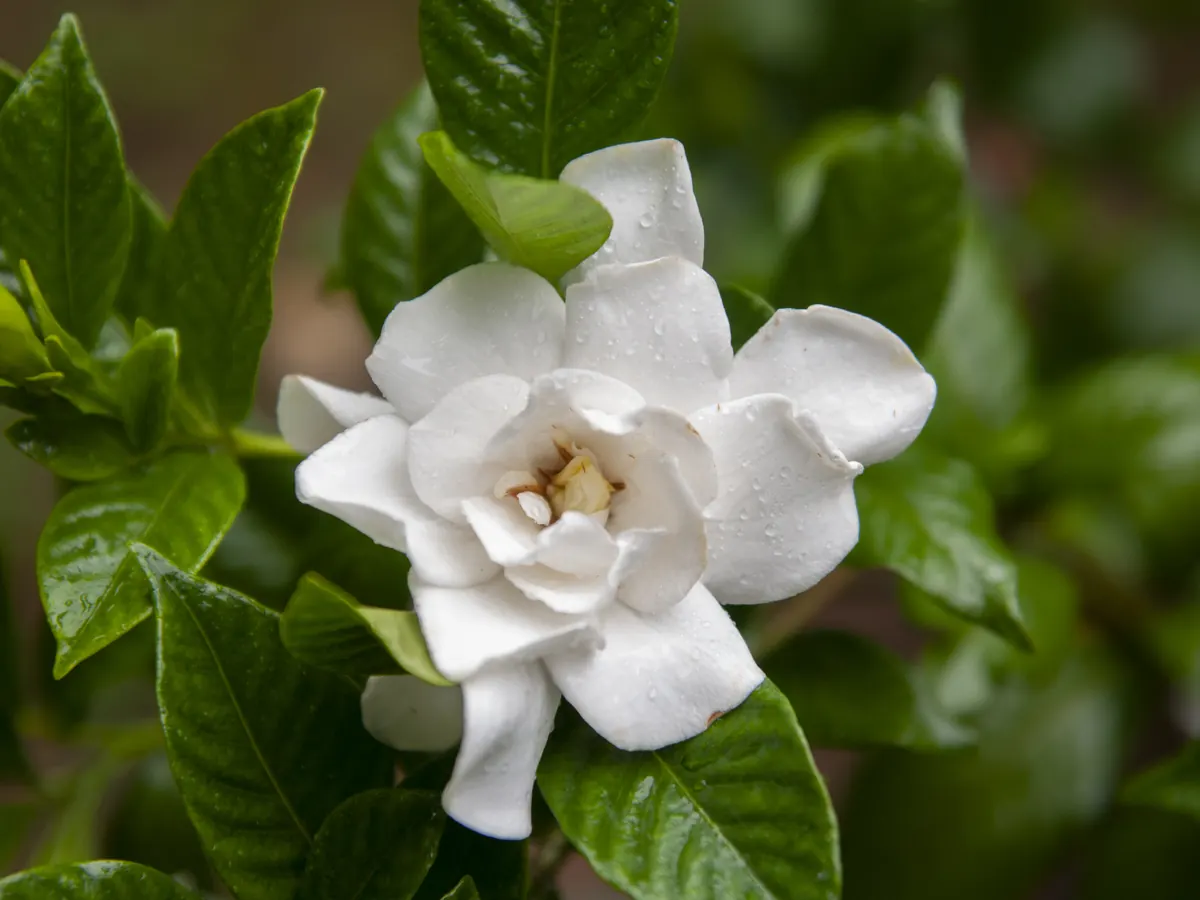
Gardenia care
Gardenia jasminoides · Rubiaceae
Also called Cape jasmine, Cape jessamine, Common gardenia.
An evergreen shrub from southern China, Japan and mainland Southeast Asia, grown for its strongly scented white flowers and glossy dark leaves. Indoors it is fussy: it wants bright light, steady warmth, humid air and acidic, evenly moist compost, and it drops its buds when any of these change suddenly.
Light
Bright IndirectWatering
WeeklyDifficulty
HardPets
Toxic to cats and dogsHeight indoorsUnconfirmed
0.5-1.2 m
Growth
Moderate
Temperature
15-24 °C
Not below 10 °C
HumidityUnconfirmed
50% - 70%
Likes humid air
Soil pHUnconfirmed
5.0-6.0
Slightly acidic soil
Native to
- China
- Taiwan
- Japan
- Vietnam
- Laos
- Cambodia
- Thailand
- Bhutan
- India
Through the year
Keep the compost evenly moist but never soggy, and do not let it dry out, even in winter. Use rainwater or other soft water at room temperature so the compost stays acidic.
-
Spring
WeeklyRepot into a slightly larger pot of ericaceous compost if needed and start feeding.
-
Summer
WeeklyMain flowering time: keep the compost moist, the air humid and the plant out of hot direct sun.
-
Autumn
WeeklyStop feeding and bring it indoors before nights drop below 10 °C if it spent summer outside.
-
Winter
Every 2 weeksGive it the brightest window you have, keep it around 16 °C and water a little less, without letting it dry out.
Feeding
Every 1-2 weeks in spring and summer. Liquid fertilizer for acid-loving plants, with iron. Stop in autumn so it does not push soft new growth.
Care tips
-
Use acidic compost
Pot it in ericaceous (lime-free) compost and feed it with fertilizer made for acid-loving plants.
-
Cooler nights for flowers
Warm days and nights a few degrees cooler help buds form; nights at 18 °C or above often mean no flowers.
-
Raise the humidity
Stand the pot on a tray of damp gravel; mist the leaves in hot weather, but not the flowers, which spot.
-
Prune right after flowering
Flowers form on new growth, so shape the plant and remove faded blooms as soon as flowering ends.
-
Avoid moving it around
It reacts to changes in light and temperature by dropping buds, so find a good spot and leave it there.
Common problems
-
Yellow leaves
What you seeLeaves, often the newest ones, turn yellow while the veins stay greener.
What to doCheck that the compost is not waterlogged; if it isn't, the cause is usually iron deficiency from hard water or alkaline compost, so switch to rainwater and apply chelated iron.
-
Bud drop
What you seeFlower buds turn brown or fall before they open.
What to doKeep the plant in one spot with a steady temperature, away from drafts and heaters, and water on a regular schedule.
-
Sap-sucking pests
What you seeWhiteflies, mealybugs, scale or fine webbing from spider mites on the leaf undersides.
What to doCheck the plant often, wipe off small infestations and treat larger ones with insecticidal soap.
Pets
Is gardenia safe for cats and dogs?
Toxic to cats and dogs. Listed by the ASPCA as toxic to cats and dogs. It contains geniposide and gardenoside, which can cause mild vomiting, diarrhea and hives.
Good to know
-
The genus is named after Alexander Garden, an 18th-century Scottish doctor and naturalist who lived in Charleston, South Carolina.
-
Its orange fruit gives a yellow dye that has been used to colour food and cloth, and it is used in Chinese herbal medicine.