Greenie Get the app

Chinese evergreen care
Aglaonema commutatum · Araceae
Also called Philippine evergreen, Poison dart plant.
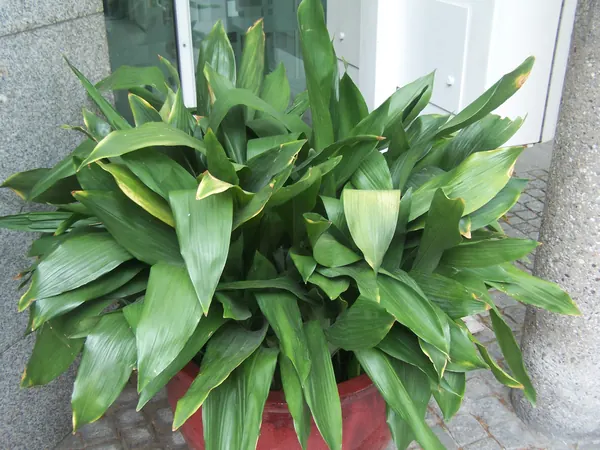
A compact aroid from the forest floors of the Philippines and Sulawesi, grown for its lance-shaped leaves patterned in silver, cream or pink. It handles low light, dry air and air conditioning well, which makes it a common office plant. Cold is the one thing it truly dislikes.
Light
Medium LightWatering
WeeklyDifficulty
EasyPets
Not confirmedHeight indoors
30-60 cm
Growth
Moderate
Temperature
20-27 °C
Not below 13 °C
Humidity
40% - 60%
Average room humidity
Soil pH
6.0-6.5
Slightly acidic soil
Native to
- Philippines
- Indonesia
Through the year
Water when the top 2 to 5 cm of soil are dry and keep the rest evenly moist. Water less from autumn to late winter but do not let it dry out fully.
-
Spring
WeeklyRepot if roots fill the pot and start feeding.
-
Summer
WeeklyKeep the soil evenly moist and out of direct sun.
-
Autumn
Every 2 weeksStop feeding and water a little less.
-
Winter
Every 2 weeksKeep it warm, above 13 °C, and away from drafts.
Feeding
Every 4 weeks in spring and summer. Balanced 20-20-20 water-soluble fertilizer at low strength.
Care tips
-
Match light to colour
Plain green types cope with dim corners; colourful ones need brighter, indirect light.
-
Use room-temperature water
Very cold or hot water can damage the roots.
-
Remove flowers
Cutting off the flower stalks keeps the plant's energy in the leaves.
-
Wipe the leaves
Dust dulls the pattern; a damp cloth every few weeks keeps them bright.
Common problems
-
Chilling damage
What you seeLeaves develop dull, damaged patches after a cold spell.
What to doKeep it above 13 °C and away from cold windows and air-conditioning vents.
-
Brown leaf edges
What you seeLeaf edges dry and turn brown.
What to doMove it out of drafts, feed less and raise the humidity a little.
-
Mealybugs
What you seeWhite, cottony clumps where leaves meet the stem.
What to doRemove them with a cotton swab dipped in rubbing alcohol and check weekly.
Pets
Is chinese evergreen safe for cats and dogs?
Not confirmed. Not on the ASPCA lists. ASPCA lists the related Chinese evergreen, Aglaonema modestum, as toxic to cats and dogs because of insoluble calcium oxalate crystals.
Good to know
-
Commutatum means changeable, after the many leaf patterns found in the species.
-
Its small white flowers can be followed by clusters of red berries.