Greenie Get the app
Coffee plant care
Coffea arabica · Rubiaceae
Also called Arabian coffee, Arabica coffee.
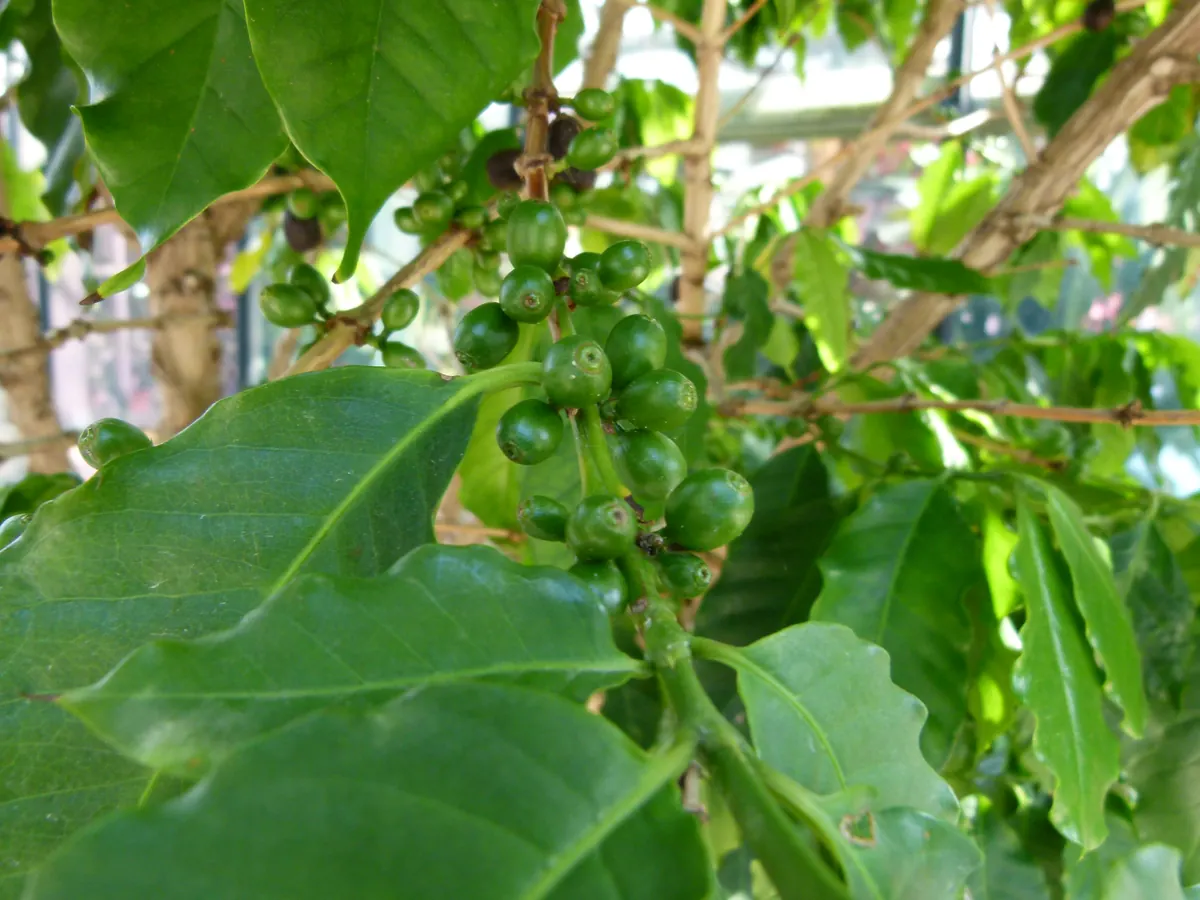
An evergreen shrub from the highland forests of Ethiopia and neighbouring East Africa, and the source of most of the world's coffee. Indoors it makes a glossy, dark green pot plant of about 1.2 to 1.8 m. Mature plants can bear scented white flowers and red berries, but it needs steady warmth, moist soil and humid air.
Light
Bright IndirectWatering
WeeklyDifficulty
MediumPets
Not confirmedHeight indoors
1.2-1.8 m
Growth
Moderate
Temperature
16-27 °C
Not below 13 °C
HumidityUnconfirmed
50% - 70%
Likes humid air
Soil pHUnconfirmed
5.5-6.5
Slightly acidic soil
Native to
- Ethiopia
- Kenya
- South Sudan
Through the year
Keep the soil evenly moist but never soggy during the growing season, watering when the surface just starts to dry. In winter, water less and let the top few centimetres dry first.
-
Spring
WeeklyStart feeding again and repot if the roots fill the pot; flowers may appear on older plants.
-
Summer
WeeklyKeep the soil moist and the air humid; it can go outside in light shade once nights stay warm.
-
Autumn
WeeklyBring it in before nights drop below about 13 °C and cut back on feeding.
-
Winter
Every 2 weeksWater moderately, keep it in good light and away from cold glass and draughts.
Feeding
Every 2 weeks in spring and summer. Balanced liquid fertilizer during the growing season. Stop feeding in winter.
Care tips
-
Bright light, no harsh sun
A bright window suits it indoors; in summer outside, give it light shade so the leaves don't scorch.
-
Raise the humidity
Group it with other plants or stand it on a tray of wet pebbles, especially when the heating is on.
-
Use a rich, free-draining mix
Pot it in loam-based compost with extra organic matter and make sure the pot drains well.
-
Be patient for flowers
Plants usually flower only from about 3 to 4 years old; arabica flowers pollinate themselves, so one plant can fruit.
-
Repot every 2 to 3 years
Move it up a size in spring, and prune to keep it to the height you want.
Common problems
-
Scale and mealybugs
What you seeBrown bumps or white cottony clumps on stems and leaf undersides, with sticky leaves below.
What to doWipe them off with a cloth or a swab dipped in rubbing alcohol, then treat with insecticidal soap and repeat weekly.
-
Spider mites
What you seeDull, finely speckled leaves and thin webbing, mostly in dry indoor air.
What to doRinse the foliage, raise the humidity and treat with insecticidal soap if they come back.
-
Cold leaf drop
What you seeLeaves yellow, brown at the edges or fall after the plant sits near a cold window or draught.
What to doMove it to a warm spot that stays above 13 °C at night and away from doors and air vents.
Pets
Is coffee plant safe for cats and dogs?
Not confirmed. Coffea is not on the ASPCA plant list. The ASPCA's 'coffee tree' entry is Polyscias guilfoylei, an unrelated aralia (toxic, saponins). Its closest listed relative, gardenia (Rubiaceae), is toxic to cats and dogs through geniposide and gardenoside. The beans contain caffeine, which the ASPCA warns is toxic to pets, so keep berries out of reach.
Good to know
-
The genus name comes from the Arabic word for the drink, qahwah.
-
Arabica means 'of Arabia', but the species is wild only in East Africa; it has been grown in Arabia for over a thousand years.
-
Each red berry, or cherry, usually holds two seeds: the coffee beans.