Greenie Get the app
Boston fern care
Nephrolepis exaltata 'Bostoniensis' · Polypodiaceae
Also called Sword fern.
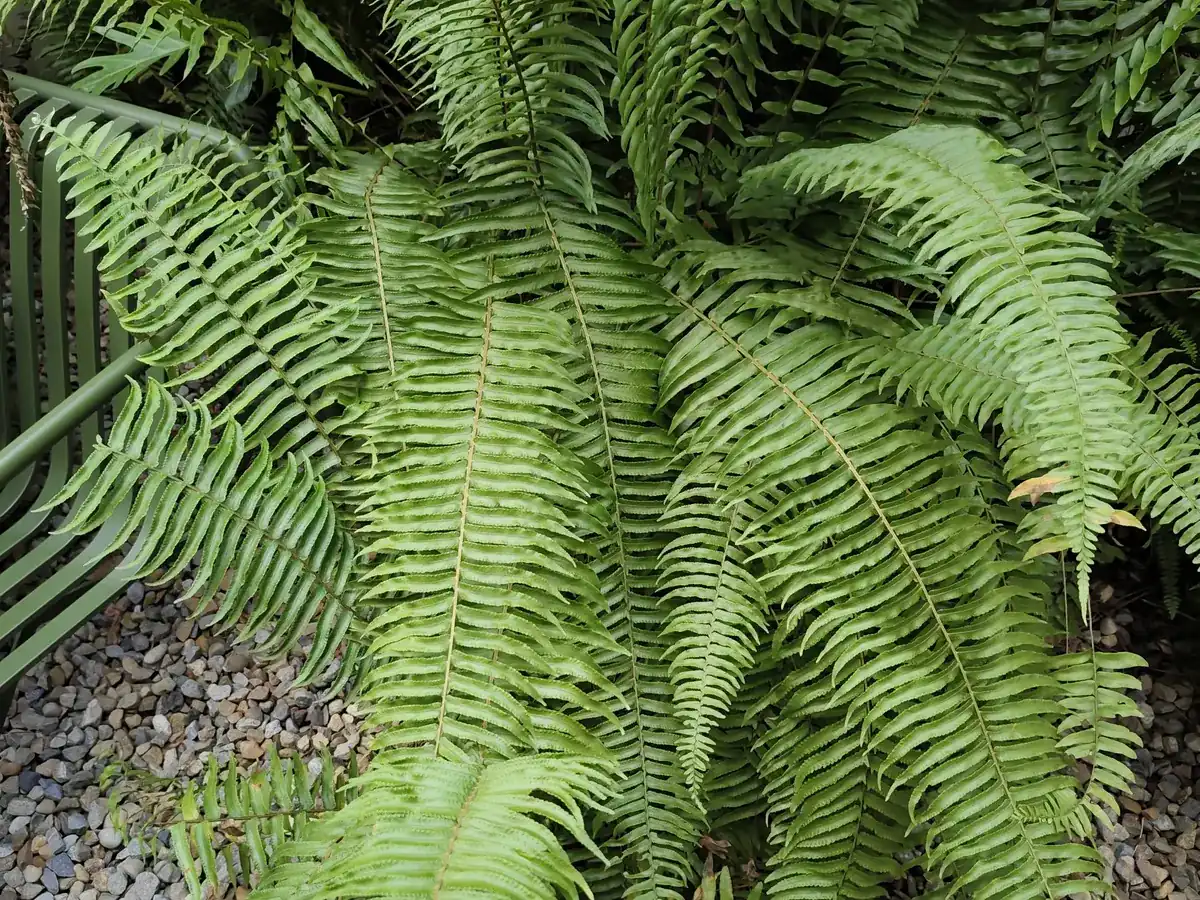
A cultivated form of the sword fern, a species native to the tropical and subtropical Americas, with long fronds that grow up and then droop over the pot. It became the classic fern for hanging baskets and pedestals. It needs steady moisture and humid air to stay green.
Light
Bright IndirectWatering
Every 2-3 daysDifficulty
MediumPets
Non-toxic to cats and dogsHeight indoors
60-90 cm
Growth
Fast
Temperature
16-24 °C
Not below 10 °C
Humidity
50% - 80%
Likes humid air
Soil pH
5.5-7.0
Slightly acidic soil
Native to
- United States
- Bahamas
- Bermuda
- Bolivia
- Brazil
- Colombia
- Costa Rica
- Cuba
- Ecuador
- Honduras
- Jamaica
- Mexico
- Nicaragua
- Panama
- Puerto Rico
- Turks & Caicos Islands
- Anguilla
- Antigua & Barbuda
- Caribbean Netherlands
- St. Barthélemy
- Guadeloupe
- St. Kitts & Nevis
- St. Martin
- Montserrat
- Sint Maarten
- British Virgin Islands
- U.S. Virgin Islands
Through the year
Keep the soil evenly moist but not soggy, checking it every couple of days in summer. In winter, water slightly less but never let it dry out.
-
Spring
Every 2-3 daysStart feeding, divide or repot crowded plants and keep the soil moist.
-
Summer
Every 2-3 daysWater often, keep it out of direct sun and raise the humidity on hot days.
-
Autumn
WeeklyStop feeding by early autumn and move it away from heaters before they come on.
-
Winter
WeeklyWater a little less but keep the soil moist, and watch for browning in dry air.
Feeding
Every 4 weeks in spring and summer. Balanced liquid fertilizer at half strength from spring to early autumn.
Care tips
-
Hang it
A hanging basket or pedestal shows off the drooping fronds and keeps them from being crushed.
-
Use soft water
Rainwater or filtered water is better than hard tap water.
-
Divide in early spring
Divide a crowded plant, or pot up runners that have formed roots, between late winter and early spring.
-
Trim old fronds
Cut yellowed or bare fronds at the base to keep the plant full.
Common problems
-
Brown, crispy fronds
What you seeLeaflets turn brown and shed, often in winter when the heating is on.
What to doWater more consistently and raise the humidity with a tray of wet pebbles, or move it to a bathroom or kitchen.
-
Heavy leaf drop
What you seeLarge numbers of leaflets fall after the soil dried out.
What to doCut all fronds back to about 5 cm and keep the soil moist; new fronds will grow back.
-
Scale insects
What you seeSmall brown bumps on the stems and frond undersides, sometimes with sticky residue.
What to doScrape or wipe them off and treat with insecticidal soap. Do not confuse them with the neat rows of brown spore dots under the leaflets.
Pets
Is boston fern safe for cats and dogs?
Non-toxic to cats and dogs. Listed by the ASPCA as non-toxic to cats and dogs.
Good to know
-
The brown dots in rows under the leaflets are spore cases, not pests.
-
The species name exaltata means very tall; wild plants can reach about 2 m.
-
It sends out thin runners that root where they touch soil, which is how it spreads.