Greenie Get the app

Areca palm care
Chrysalidocarpus lutescens · Arecaceae
Also called Golden cane palm, Butterfly palm, Yellow palm.
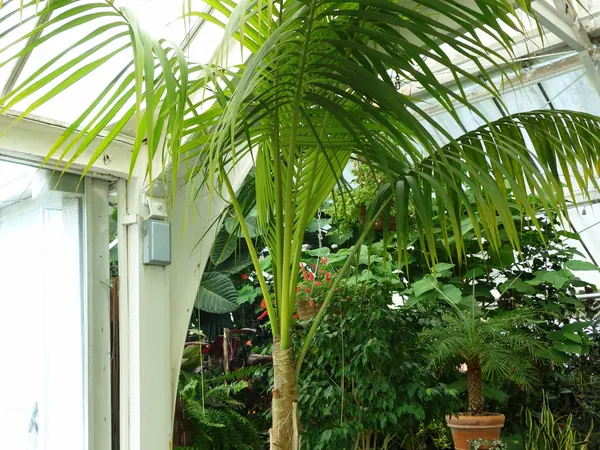
A clumping feather palm from eastern Madagascar, where it is now endangered in the wild. Many ringed, yellow-green canes carry arching fronds whose leaflets form a V along the midrib. It is one of the most popular indoor palms, needs more light and humidity than most, and reaches about 2 m in a pot.
Light
Bright IndirectWatering
WeeklyDifficulty
MediumPets
Non-toxic to cats and dogsHeight indoors
1.8-2.1 m
Growth
Moderate
Temperature
18-29 °C
Not below 13 °C
HumidityUnconfirmed
50% - 70%
Likes humid air
Soil pHUnconfirmed
5.5-7.0
Slightly acidic soil
Native to
- Madagascar
Through the year
Keep the mix evenly moist but never soggy from spring to autumn, and empty the saucer after watering. In winter let the surface dry slightly before watering again.
-
Spring
WeeklyRepot if roots fill the pot and start feeding again.
-
Summer
WeeklyWater often enough that the mix never dries out and keep the humidity up; small yellow flower sprays may appear on mature plants.
-
Autumn
WeeklyStop feeding and keep it away from cold windows as nights cool.
-
Winter
Every 2 weeksKeep it above 13 °C and away from radiators, water less and watch closely for spider mites.
Feeding
2-3 times a year in spring and summer. Slow-release palm fertilizer (such as 8-2-12) with micronutrients. Do not feed in winter.
Care tips
-
Give it light
Place it near an east, west or south window with filtered light; direct midday sun through glass scorches the fronds.
-
Add humidity
It wants humid air, so use a humidifier or a pebble tray when the heating is on.
-
Leave room to grow
It puts on 15-25 cm a year and spreads wide, so it often outgrows a small corner.
-
Repot every 2-3 years
Move it up one pot size in spring, handling the roots gently.
-
Skip leaf shine
Wipe the fronds with a damp cloth instead; leaf-shine products can damage palms.
Common problems
-
Spider mites
What you seePale speckled leaflets and fine webbing, worst in warm, dry rooms.
What to doRaise the humidity, rinse the fronds in the shower every few weeks and treat with insecticidal soap or miticide if mites persist.
-
Brown leaf tips
What you seeLeaflet tips turn brown and crisp.
What to doWater before the mix dries out, add humidity and cut back on fertilizer, which also burns tips.
-
Yellowing fronds
What you seeFronds and canes turn yellowish rather than green.
What to doSome yellow is natural, especially in strong light; move it out of direct sun and feed with a palm fertilizer that includes micronutrients.
Pets
Is areca palm safe for cats and dogs?
Non-toxic to cats and dogs. Listed by the ASPCA as non-toxic to cats and dogs, under the synonym Dypsis lutescens. People should not eat the growing tip (heart of palm), which contains cyanogenic glycosides.
Good to know
-
The species name lutescens means turning yellow, after the yellow canes, leaf stalks and flowers.
-
It was sold for years as Dypsis lutescens but is now accepted under its older name, Chrysalidocarpus lutescens; the genus name compares the fruit to a chrysalis.
-
Although it is among the most popular indoor palms in the world, it is endangered in its native Madagascar because of habitat loss.