Greenie Get the app
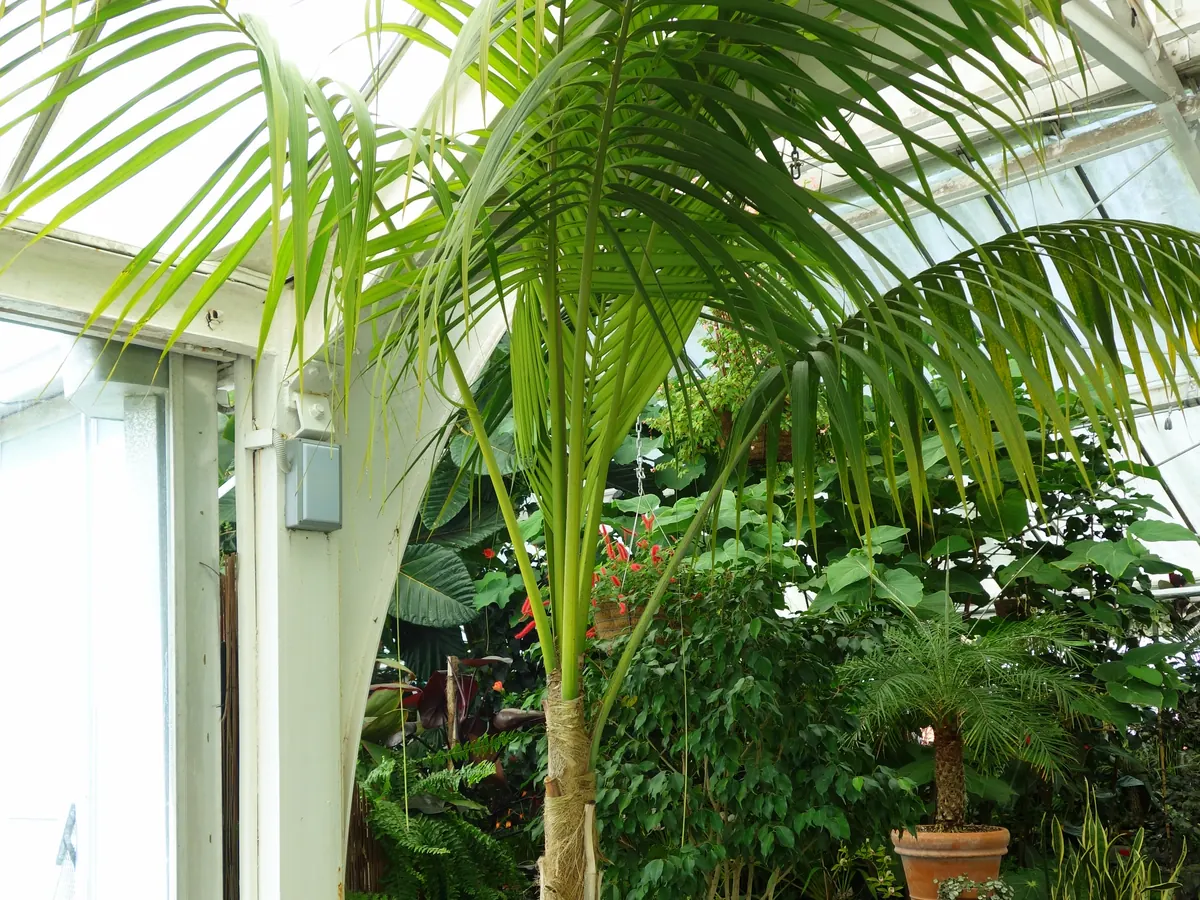
Kentia palm care
Howea forsteriana · Arecaceae
Also called Sentry palm, Paradise palm, Thatch palm.
A single-trunked feather palm found in the wild only on Lord Howe Island, off the east coast of Australia. It grows slowly, puts up with low light, dry air and the odd missed watering, and has been a classic indoor palm since Victorian times. In a pot it usually stays around 2 m tall.
Light
Medium LightWatering
WeeklyDifficulty
EasyPets
Non-toxic to cats and dogsHeight indoors
1-2 m
Growth
Slow
Temperature
16-27 °C
Not below 16 °C
HumidityUnconfirmed
40% - 60%
Average room humidity
Soil pHUnconfirmed
5.5-7.0
Slightly acidic soil
Native to
- Australia
Through the year
Water well once the surface of the mix has dried in spring and summer, and empty the saucer. In winter wait until the mix is dry before watering again; constant wet soil in winter is what kills it most often.
-
Spring
WeeklyFeed and repot if the roots fill the pot; new fronds start to open.
-
Summer
WeeklyWater generously and keep it away from hot afternoon sun; a shaded patio is fine in warm weather.
-
Autumn
Every 2 weeksStop feeding and start letting the mix dry more between waterings.
-
Winter
Every 2 weeksKeep it away from cold drafts and radiators and water only when the mix is dry.
Feeding
2-3 times a year in spring and summer. Slow-release palm fertilizer with potassium, magnesium and micronutrients. Do not feed in winter.
Care tips
-
Keep it out of direct sun
It grows best in bright, filtered light, but strong sun through glass scorches the fronds.
-
Never cut the top
Each trunk grows from a single central bud, so it cannot be pruned shorter; only remove fronds that have fully browned.
-
Pull old leaf bases gently
Remove dead frond bases only when they come away easily; tearing them scars the trunk and lets rot in.
-
Repot rarely
It likes a snug pot and has fragile roots; move it up one size every two to three years in spring, only when roots fill the pot.
-
Skip leaf shine
Wipe dust off with a damp cloth instead; leaf-shine products can damage palm fronds.
Common problems
-
Potassium deficiency
What you seeThe oldest fronds get dead, brown leaflet tips and edges, worst toward the end of the frond.
What to doFeed with a slow-release palm fertilizer that contains potassium and micronutrients; the damaged fronds will not recover, but new ones will grow clean.
-
Spider mites and scale
What you seeFine webbing and pale speckling on leaflets, or small brown bumps along the stems and undersides.
What to doShower the fronds, wipe scale off with a damp cloth and use insecticidal soap if pests come back.
-
Root rot
What you seeFronds yellow and droop while the mix stays wet, often in winter.
What to doLet the mix dry before watering again and repot into a fresh, free-draining mix if the roots are dark and soft.
Pets
Is kentia palm safe for cats and dogs?
Non-toxic to cats and dogs. Listed by the ASPCA as non-toxic to cats and dogs, under both kentia palm and paradise palm.
Good to know
-
The genus is named after Lord Howe Island, the only place it grows wild.
-
Victorian hotels, restaurants and parlors were filled with kentia palms, which is why it shows up in so many old photos.
-
Its fruit can take three to four years to ripen, and the seeds may sit for months or years before they sprout.