Greenie Get the app
Ponytail palm care
Beaucarnea recurvata · Asparagaceae
Also called Elephant's foot, Bottle palm, Ponytail plant.
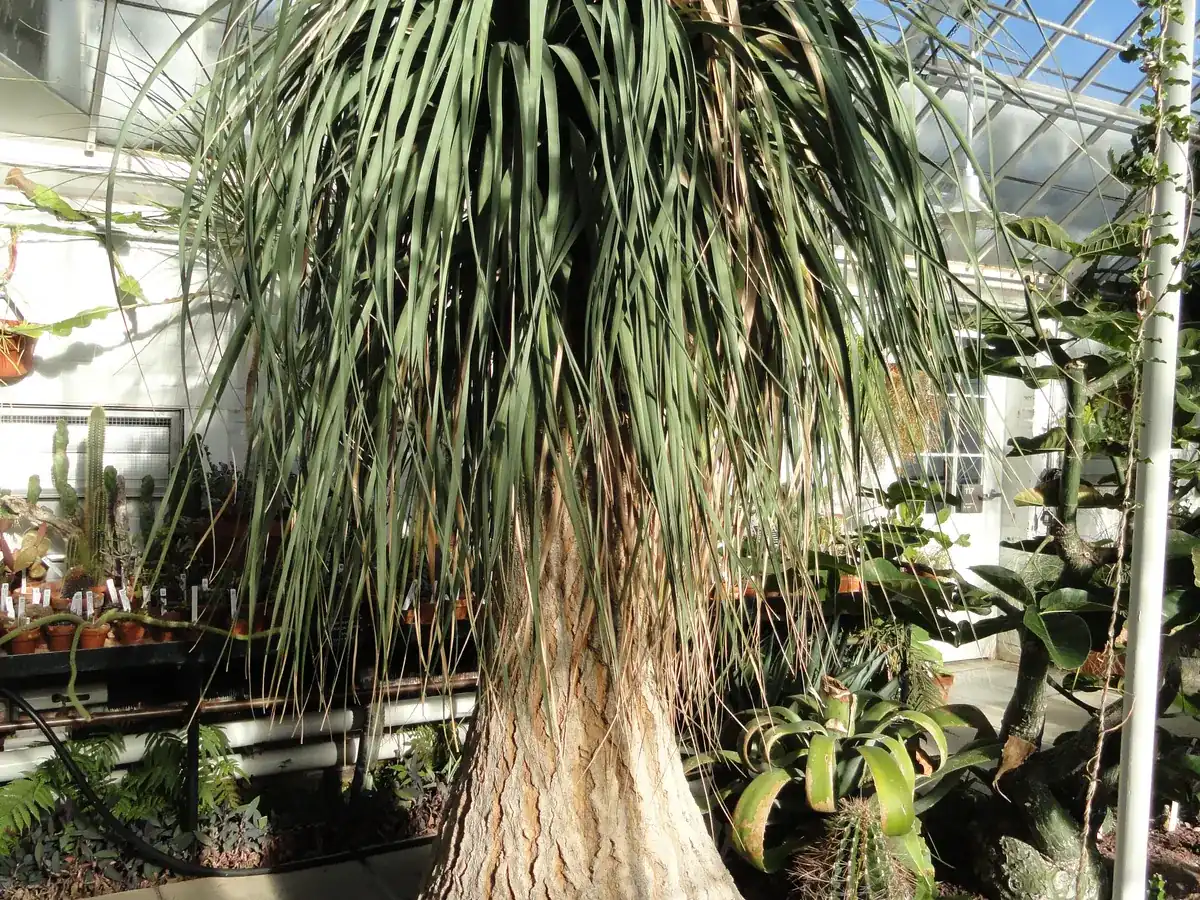
Despite its name, this is not a true palm but a member of the asparagus family, related to agaves and yuccas, from dry forests in eastern Mexico. It stores water in a swollen base and grows a trunk topped by a fountain of long, thin, curling leaves. It grows slowly and puts up with dry indoor air and missed waterings.
Light
Full SunWatering
Every 2 weeksDifficulty
EasyPets
Non-toxic to cats and dogsHeight indoors
1-2 m
Growth
Slow
TemperatureUnconfirmed
16-27 °C
Not below 10 °C
Humidity
30% - 50%
Fine in dry rooms
Soil pH
6.0-7.5
Neutral soil
Native to
- Mexico
Through the year
Water deeply, then wait until the soil is dry before watering again; in winter, once a month is usually enough.
-
Spring
Every 2 weeksGrowth restarts: water when dry and repot if the base touches the rim of the pot.
-
Summer
Every 2 weeksGive it full sun and water deeply whenever the soil dries out.
-
Autumn
MonthlyWater less and bring it in before nights fall below 10 °C.
-
Winter
MonthlyKeep it in the sunniest spot and water only now and then; dry heated air does not bother it.
Feeding
Every 6 weeks in spring and summer. Cactus or balanced liquid fertilizer at half strength. Do not feed in autumn or winter.
Care tips
-
Keep the pot small
A heavy, shallow pot just wider than the base stops the soil from staying wet.
-
Give it sun
Place it in the sunniest window; in summer it can go outside after a gradual move into full sun.
-
Tidy the leaves
Peel off old lower leaves once they dry, and clip brown tips.
-
Repot rarely
Every 2 to 3 years in spring is enough; it grows well when slightly rootbound.
Common problems
-
Soft base
What you seeThe swollen base feels squishy or smells bad.
What to doStop watering at once, check the roots and cut out any rot, then repot in dry cactus mix in a pot just wider than the base.
-
Brown leaf tips
What you seeLeaf ends dry out and turn brown.
What to doA few are normal: clip them with clean scissors. If many appear, water more deeply in summer.
-
Spider mites
What you seePale speckling and fine webs between the leaves.
What to doRinse the foliage in the shower and treat with insecticidal soap.
Pets
Is ponytail palm safe for cats and dogs?
Non-toxic to cats and dogs. Listed by the ASPCA as non-toxic to cats and dogs.
Good to know
-
In the wild it can reach about 9 m tall.
-
Plants take many years to flower and rarely do so indoors; the flowers are tiny and creamy white.
-
The species name recurvata means curved backwards and refers to the leaves.