Greenie Get the app
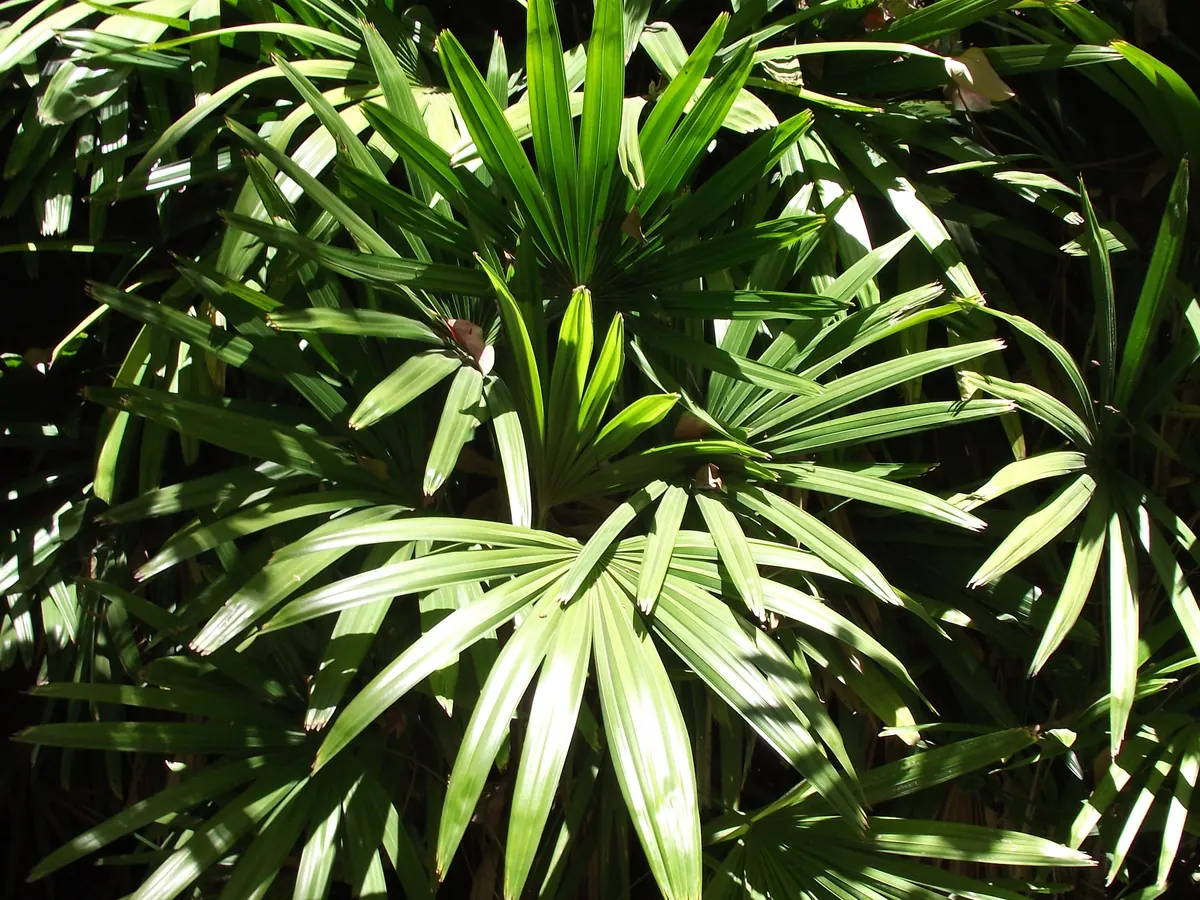
Lady palm care
Rhapis excelsa · Arecaceae
Also called Bamboo palm, Broadleaf lady palm, Miniature fan palm.
A clumping fan palm from the shady forests of southern China and Vietnam. Thin, fiber-wrapped canes carry glossy leaves split into blunt, finger-like segments, and new canes keep coming up from underground rhizomes. It is one of the best palms for low light and usually reaches 1-2 m in a pot.
Light
Medium LightWatering
WeeklyDifficulty
EasyPets
Non-toxic to cats and dogsHeight indoors
1.2-2.4 m
Growth
Slow
Temperature
13-27 °C
Not below 10 °C
HumidityUnconfirmed
30% - 50%
Fine in dry rooms
Soil pHUnconfirmed
5.5-7.0
Slightly acidic soil
Native to
- China
- Vietnam
Through the year
Water thoroughly and let the top of the mix dry a little before the next watering; water less in winter. Twice a year, run a lot of water through the pot to flush out fertilizer salts.
-
Spring
WeeklyDivide or repot if needed and give a light feed; new canes appear from the base.
-
Summer
WeeklyKeep the mix evenly moist; it can spend summer outside in full shade.
-
Autumn
Every 2 weeksBring it back indoors before nights drop below about 10 °C and cut back on watering.
-
Winter
Every 2 weeksKeep it slightly cooler, above 13 °C, and let the mix dry a little more between waterings.
Feeding
2-3 times a year in spring and summer. Balanced slow-release or palm fertilizer with micronutrients, at a reduced rate. Variegated forms need even less.
Care tips
-
Fine in low light
It grows best in bright, indirect light but copes with spots well away from a window; direct sun burns the leaves.
-
Feed very little
It grows slowly and is easily harmed by too much fertilizer; a light feed a few times in the growing season is enough.
-
Divide crowded clumps
Split the clump in spring or early summer, keeping several canes and roots in each piece.
-
Good by a door
It tolerates the short blasts of cold air near an entrance better than most palms, as long as it never sits in frost.
Common problems
-
Scale insects
What you seeSmall brown or white bumps on the canes and leaf undersides, often hidden in the fiber at the leaf bases.
What to doCheck the fiber closely, scrape or wipe the scale off and treat with insecticidal soap or horticultural oil.
-
Yellow new leaves
What you seeThe youngest leaves turn pale greenish yellow, sometimes with darker blotches.
What to doThe old potting mix has broken down and the roots lack air; shake off as much as you can and repot in fresh mix.
-
Brown leaf tips
What you seeSegment tips on older leaves turn brown and dry.
What to doFlush the pot with plenty of water to wash out fertilizer salts, feed less, and use good-quality water.
Pets
Is lady palm safe for cats and dogs?
Non-toxic to cats and dogs. Listed by the ASPCA as non-toxic to cats and dogs, under the synonym Rhapis flabelliformis.
Good to know
-
Japanese growers have selected many miniature and striped cultivars, and some true dwarfs reach only about 1.2 m after decades.
-
Variegated plants are propagated only by division, because seedlings lose the stripes.
-
Male and female flowers grow on separate plants, so a single potted palm rarely sets fruit.