 Greenie Get the app
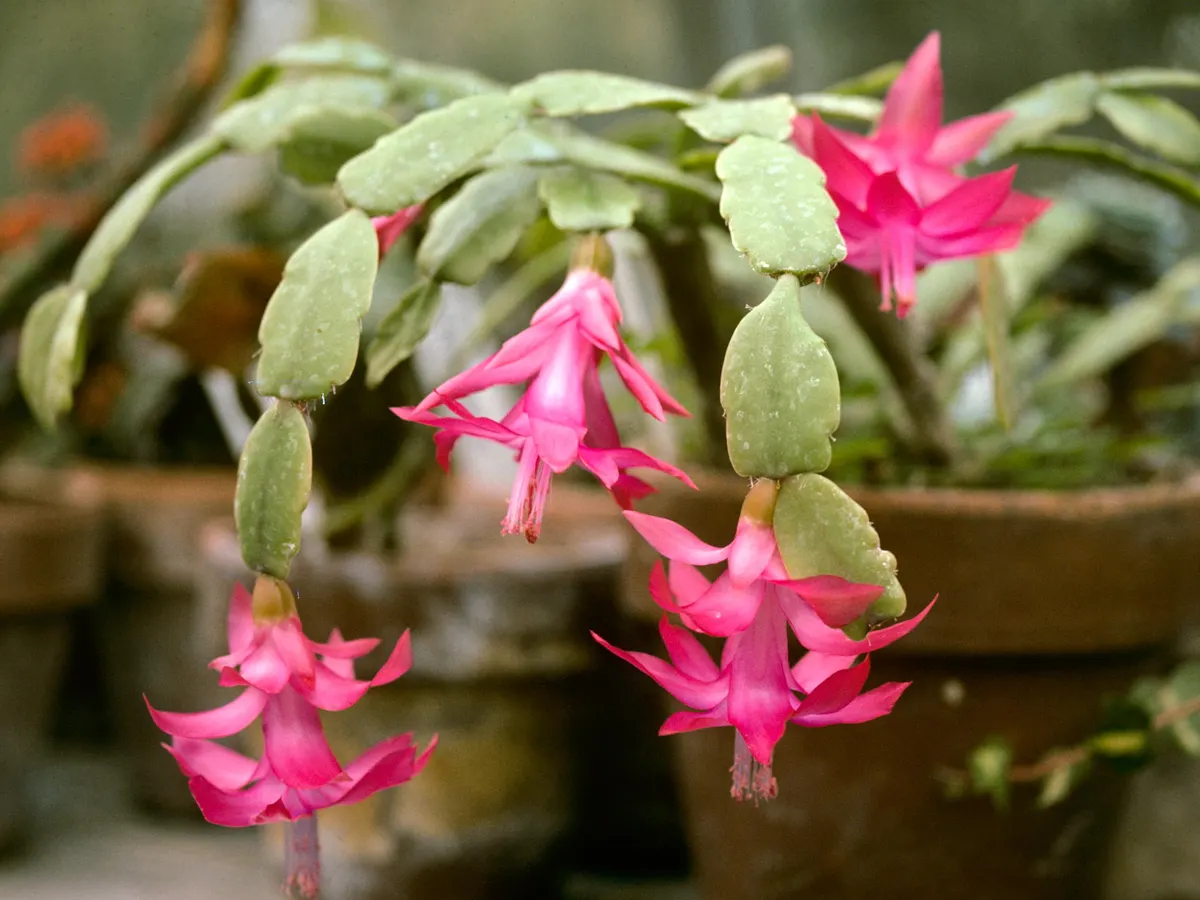
Christmas cactus care
Schlumbergera × buckleyi · Cactaceae
Also called Holiday cactus, Leaf-flowering cactus.
A garden hybrid of two forest cacti from southeastern Brazil, grown for its pink to red flowers in midwinter. Its flat, jointed, spineless stems arch over the edge of the pot. Many plants sold under this name are really Thanksgiving cactus (Schlumbergera truncata), which has pointed teeth on its stem segments and flowers a few weeks earlier.
Light
Bright IndirectWatering
WeeklyDifficulty
MediumPets
Not confirmedHeight indoors
15-45 cm
GrowthUnconfirmed
Moderate
Temperature
15-24 °C
Not below 10 °C
HumidityUnconfirmed
50% - 70%
Likes humid air
Soil pH
5.5-6.5
Slightly acidic soil
Through the year
Water when the top few centimetres are dry but never let the pot dry out completely. Water less during its two rest periods: from mid-September until buds form, and after flowering until late March.
-
Spring
WeeklyWater regularly, start feeding and repot at the end of March if needed.
-
Summer
WeeklyKeep it in bright shade; it can go outside to a sheltered, shaded spot in warm weather.
-
Autumn
Every 2 weeksFrom mid-September give it cool nights, long darkness and less water so it forms buds.
-
Winter
Every 2 weeksFlowers open: keep the soil moist and do not move it. After flowering, let it rest cooler and drier until late March.
Feeding
Every 4 weeks in spring and summer. Balanced houseplant fertilizer at half strength from April to September. Stop in autumn so the plant can set buds.
Care tips
-
Know which one you have
Christmas cactus has rounded scallops on its stem edges; Thanksgiving cactus has sharp, claw-like points.
-
Keep it a little potbound
Repot only every 2 to 3 years, at the end of March, into an airy mix with bark or perlite.
-
Grow new plants from tips
Snap off 2 or 3 segments, let them dry for a day or two and push them into damp mix; they root in 3 to 12 weeks.
-
Avoid hot sun
Direct summer sun bleaches the stems; an east-facing window is ideal.
Common problems
-
Buds dropping
What you seeFlower buds fall off before they open.
What to doOnce buds form, keep the plant in one place, away from drafts, heaters and big temperature swings, and keep the soil evenly moist.
-
No flowers
What you seeThe plant grows well but does not bloom.
What to doFrom mid-September, give it 6 to 8 weeks of cool nights around 12 to 15 °C and about 13 hours of full darkness, with no lamps on in the room.
-
Limp, wrinkled stems
What you seeSegments go soft and wrinkled.
What to doCheck the roots: if the soil is dry, water more; if roots are brown and mushy, repot into fresh, airy mix and water less.
Pets
Is christmas cactus safe for cats and dogs?
Not confirmed. Not on the ASPCA lists under this name. ASPCA's Christmas cactus entry is filed as Schlumbergera bridgesii (now S. russelliana, one parent of this hybrid), which it lists as non-toxic to cats and dogs.
Good to know
-
The hybrid was raised in an English nursery in the mid-1800s by crossing two Brazilian species.
-
In the wild its parent species grow on trees and rocks in humid mountain forest, not in desert.
-
It can live for decades and flowers more each year as it adds stems.
Similar plants
-
Succulents & cacti String of hearts Ceropegia woodii Bright Indirect Every 2 weeks
-
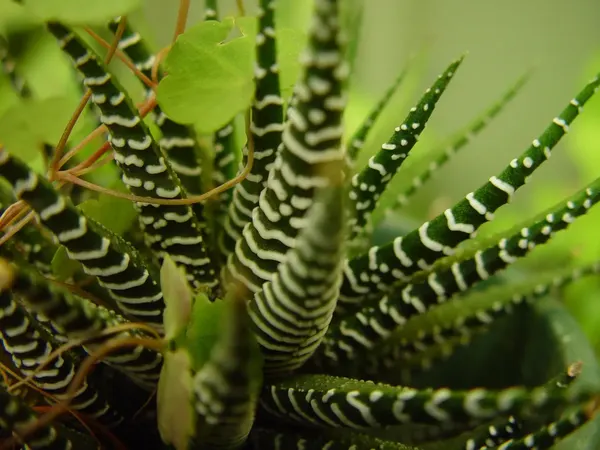 Succulents & cacti Zebra haworthia Haworthiopsis attenuata Bright Indirect Every 2 weeks
-
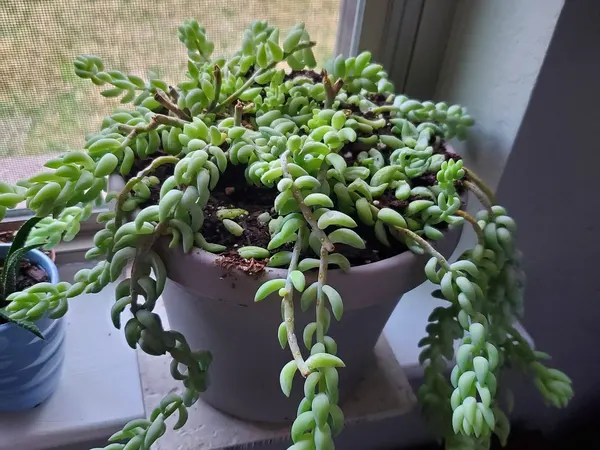 Succulents & cacti Burro's tail Sedum morganianum Partial Sun Every 2 weeks
-
Succulents & cacti Echeveria Echeveria elegans Full Sun Every 2 weeks