Greenie Get the app
Moth orchid care
Phalaenopsis · Orchidaceae
Also called Phalaenopsis, Phal, Moon orchid.
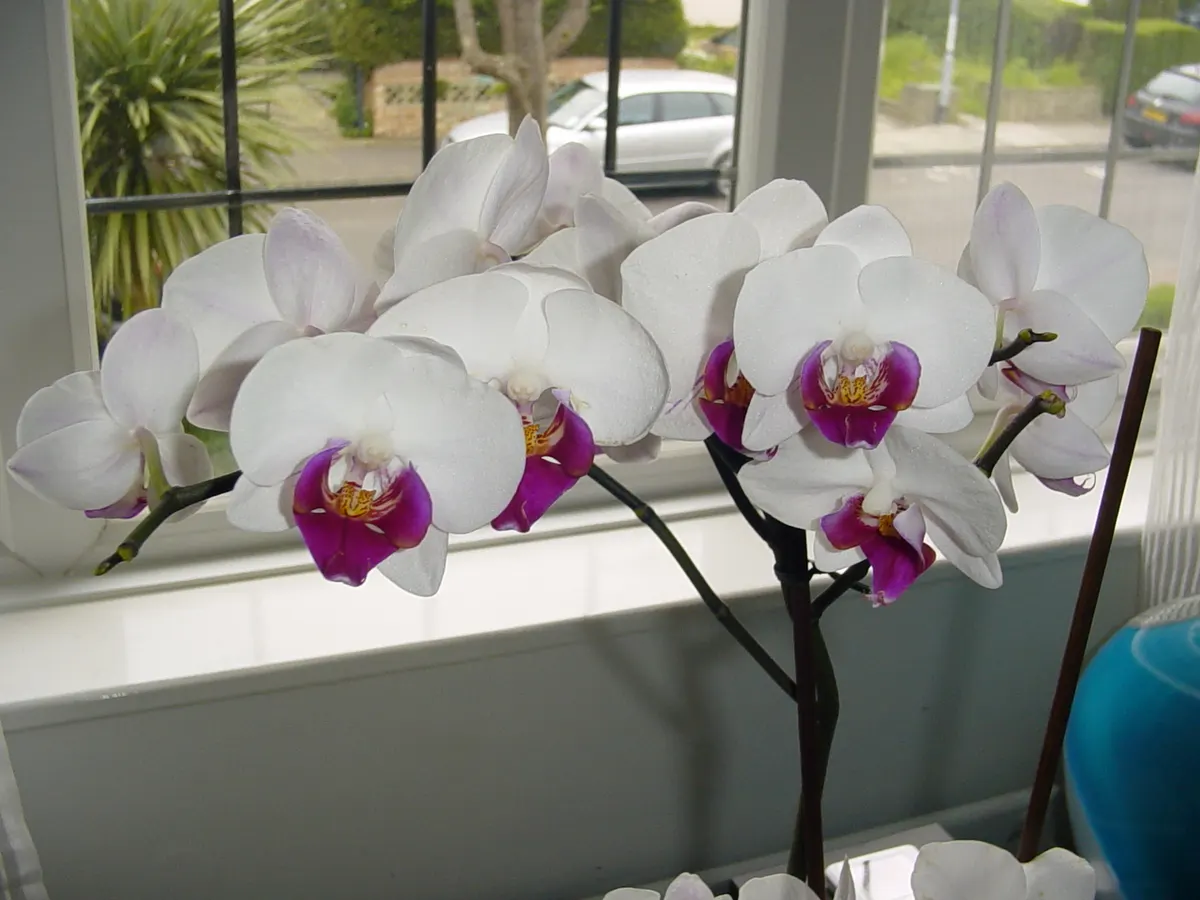
The orchid sold in almost every supermarket and garden centre. Nearly all plants on sale are hybrids of tropical Asian species that grow on tree branches, so the roots want air as much as water. Indoors it holds long sprays of flat flowers for two to four months and can rebloom every year.
Light
Bright IndirectWatering
WeeklyDifficulty
EasyPets
Non-toxic to cats and dogsHeight indoors
30-60 cm
GrowthUnconfirmed
Slow
Temperature
18-29 °C
Not below 13 °C
Humidity
40% - 60%
Average room humidity
Soil pH
5.5-6.5
Slightly acidic soil
Through the year
Soak the bark in the morning, let it drain fully and water again when the pot feels light; never leave water in the crown or let the pot sit in a saucer of water.
-
Spring
WeeklyRepot after flowering if the bark is old and start regular feeding.
-
Summer
WeeklyWater more often and keep it out of direct midday sun.
-
Autumn
WeeklyLet nights cool down a little to encourage a new flower spike.
-
Winter
Every 2 weeksWater less often, keep leaves off cold glass and enjoy the flowers.
Feeding
Every 2 weeks in spring and summer. Balanced orchid fertilizer at half strength after watering. Flush the pot with plain water once a month.
Care tips
-
Use orchid bark, not soil
A coarse bark mix lets air reach the roots; normal potting compost suffocates them.
-
Prefer an east window
Morning sun is fine, but strong afternoon sun through glass scorches the leaves.
-
Cool nights trigger flowers
A few weeks with nights near 15 °C in autumn help the plant start a new flower spike.
-
Trim the old spike
When the last flower falls, cut the stem just above a node to get a side branch, or near the base to let the plant rest.
-
Repot every 2 years
Do it after flowering, when the bark starts to break down or roots crowd the pot.
Common problems
-
Root and crown rot
What you seeRoots turn brown and mushy, or the base of the leaves goes soft and black.
What to doCut away rotten roots, repot in fresh orchid bark and water only in the morning, keeping water out of the crown.
-
Bud blast
What you seeFlower buds turn yellow and drop before they open.
What to doKeep the plant in one spot away from drafts, heaters and fruit bowls, and water on a steady routine while it is in bud.
-
Mealybugs and scale
What you seeWhite cottony clumps or small brown bumps on leaves and flower stems.
What to doWipe them off with a cotton swab dipped in rubbing alcohol and check the leaf undersides every week until none return.
Pets
Is moth orchid safe for cats and dogs?
Non-toxic to cats and dogs. Listed by the ASPCA as non-toxic to cats, dogs and horses.
Good to know
-
The name comes from the Greek for 'moth-like', after the shape of the flowers.
-
In the wild most species grow on tree trunks and branches, not in soil.