Greenie Get the app
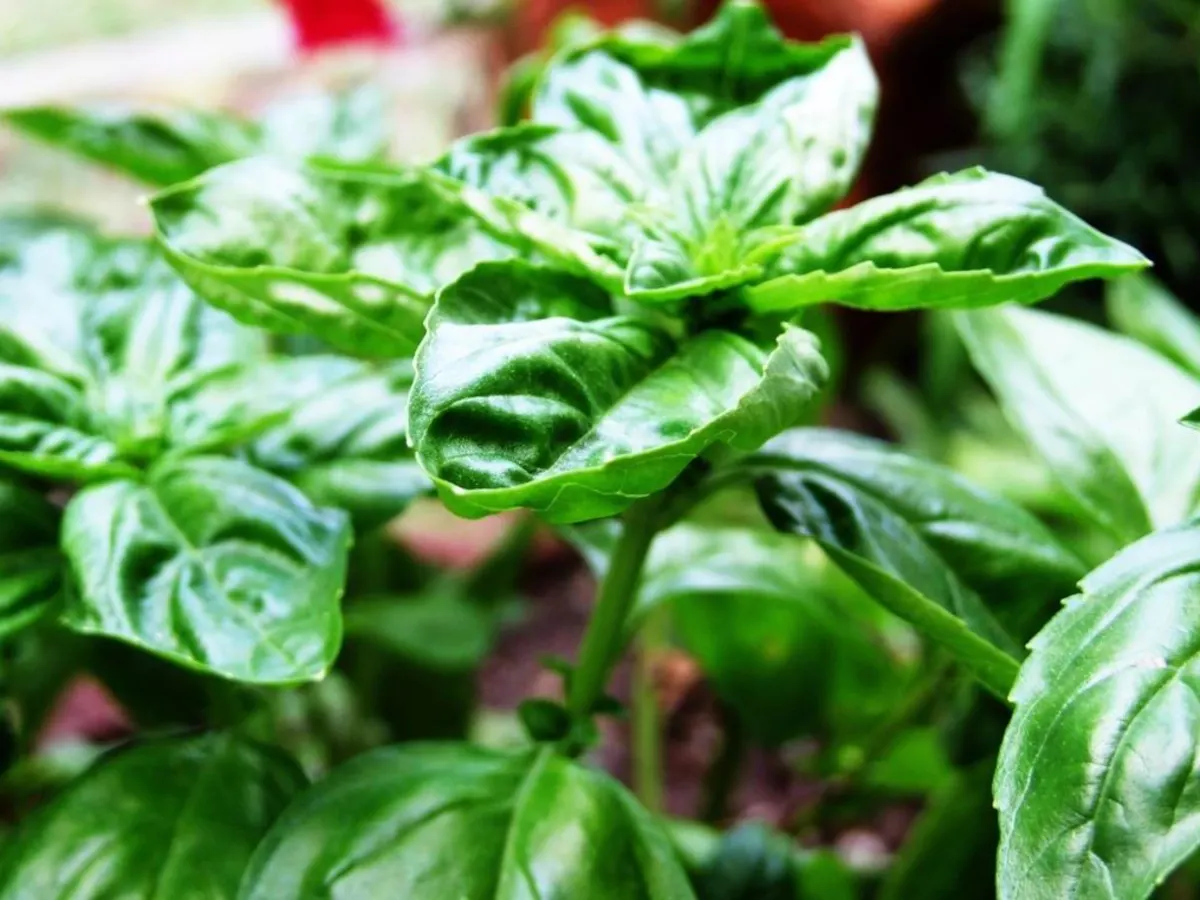
Basil care
Ocimum basilicum · Lamiaceae
Also called Sweet basil, Common basil, Genovese basil.
A tender, fast-growing herb from tropical Asia, grown for its fragrant leaves. On a sunny, warm windowsill it gives harvests for months, but it sulks in cold or dim spots and is usually treated as an annual.
Light
Full SunWatering
Every 2-3 daysDifficulty
MediumPets
Non-toxic to cats and dogsHeight indoors
20-45 cm
Growth
Fast
Temperature
18-27 °C
Not below 10 °C
HumidityUnconfirmed
40% - 60%
Average room humidity
Soil pH
6.0-7.5
Neutral soil
Native to
- India
- Bangladesh
- Nepal
- Bhutan
- Sri Lanka
- Myanmar (Burma)
- Thailand
- Laos
- Cambodia
- Vietnam
- China
- Taiwan
- Philippines
- Malaysia
- Brunei
- Indonesia
- Timor-Leste
- Papua New Guinea
- Australia
Through the year
Keep the compost evenly moist but never soggy; water at the base in the morning so the roots are not wet overnight.
-
Spring
Every 2-3 daysSow seed or buy plants and keep them on a warm, sunny sill.
-
Summer
Every 2-3 daysPeak season: harvest often, pinch flowers and water regularly.
-
Autumn
WeeklyTake cuttings in water to keep plants going indoors as nights cool.
-
Winter
WeeklyHard to keep going: give it the warmest, brightest spot or a grow light, and water less.
Feeding
Every 2 weeks in spring and summer. Balanced liquid fertilizer at half strength. Overfeeding weakens the flavour.
Care tips
-
Split supermarket pots
Those pots hold many crowded seedlings; divide them into 3 or 4 clumps in fresh compost so they last.
-
Harvest from the top
Cut each stem just above a pair of leaves so two new shoots grow.
-
Pinch off flowers
Flowering makes the leaves less tasty and slows new growth.
-
Add a grow light in winter
Short days are not enough; 12 to 14 hours under a lamp keeps it productive.
-
Use a big enough pot
A pot at least 15 to 20 cm wide with drainage holes dries out less often.
Common problems
-
Downy mildew
What you seeLeaves yellow between the veins with grey-purple fuzz on the undersides.
What to doRemove and bin affected plants, water at the soil only, improve air flow and choose a resistant variety next time.
-
Cold damage
What you seeLeaves blacken, droop or show dark patches after a cold night.
What to doMove it off the windowsill on cold nights and keep it above 10 °C at all times.
-
Leggy, flowering stems
What you seeTall, thin stems with few leaves and flower spikes forming.
What to doGive it more direct sun and pinch out the tips and flower buds regularly.
Pets
Is basil safe for cats and dogs?
Non-toxic to cats and dogs. Listed by the ASPCA as non-toxic to cats and dogs.
Good to know
-
The species name means 'royal' or 'princely'.
-
Left to flower, its small white to purple blooms are popular with bees.