Greenie Get the app
Spearmint care
Mentha spicata · Lamiaceae
Also called Mint, Garden mint, Common mint.
The classic kitchen mint, a perennial that spreads quickly by underground stems and grows almost anywhere it has moisture. It is one of the easiest herbs to keep on a windowsill, as long as it has its own pot and is cut often.
Light
Partial SunWatering
Every 2-3 daysDifficulty
EasyPets
Toxic to cats and dogsHeight indoors
30-60 cm
Growth
Fast
TemperatureUnconfirmed
15-24 °C
Not below 0 °C
HumidityUnconfirmed
40% - 60%
Average room humidity
Soil pH
6.0-7.5
Neutral soil
Native to
- Afghanistan
- Albania
- Armenia
- Austria
- Azerbaijan
- Belgium
- Bulgaria
- Bosnia & Herzegovina
- Switzerland
- China
- Cyprus
- Czechia
- Germany
- Denmark
- Egypt
- France
- Georgia
- Greece
- Croatia
- Hungary
- India
- Iran
- Israel
- Italy
- Lebanon
- Luxembourg
- Moldova
- North Macedonia
- Montenegro
- Netherlands
- Norway
- Nepal
- Pakistan
- Poland
- Palestinian Territories
- Romania
- Russia
- Serbia
- Slovakia
- Slovenia
- Sweden
- Syria
- Turkmenistan
- Türkiye
- Ukraine
Through the year
Keep the compost moist; pots on a sunny sill can dry out in a day or two in summer.
-
Spring
Every 2-3 daysDivide or repot crowded plants and start regular harvesting.
-
Summer
Every 2-3 daysWater often and pinch off flower spikes to keep the leaves coming.
-
Autumn
WeeklyBring a pot indoors to a sunny windowsill to keep picking through winter.
-
Winter
WeeklyGrowth slows; water less, keep it bright and expect smaller leaves.
Feeding
Every 4 weeks in spring and summer. Balanced liquid fertilizer at half strength to support leafy growth.
Care tips
-
Give it its own pot
Its runners crowd out any other herb sharing the container.
-
Harvest often
Regular picking keeps the plant bushy and full of young leaves.
-
Cut it back after flowering
Take the stems down to about 5 cm to get a fresh flush of leaves.
-
Root a stem in water
A cutting in a glass of water roots in about a week and can be potted up.
-
Divide every few years
Split crowded pots in spring and replant a healthy piece in fresh compost.
Common problems
-
Mint rust
What you seeOrange, then yellow or black dusty spots on stems and leaf undersides.
What to doCut affected stems to the base and bin them; if it returns, start over with a clean plant in fresh compost.
-
Thin, pale stems
What you seeLong, weak shoots with small leaves.
What to doMove it to a brighter window and cut the stems back by half to force new growth.
-
Aphids
What you seeClusters of small green or black insects on soft shoot tips.
What to doRinse them off with water and pinch out the worst tips.
Pets
Is spearmint safe for cats and dogs?
Toxic to cats and dogs. Contains essential oils; the ASPCA lists mints as toxic, with vomiting and diarrhea after eating large amounts.
Good to know
-
The genus is named after Minthe, a nymph in Greek myth who was turned into a mint plant.
-
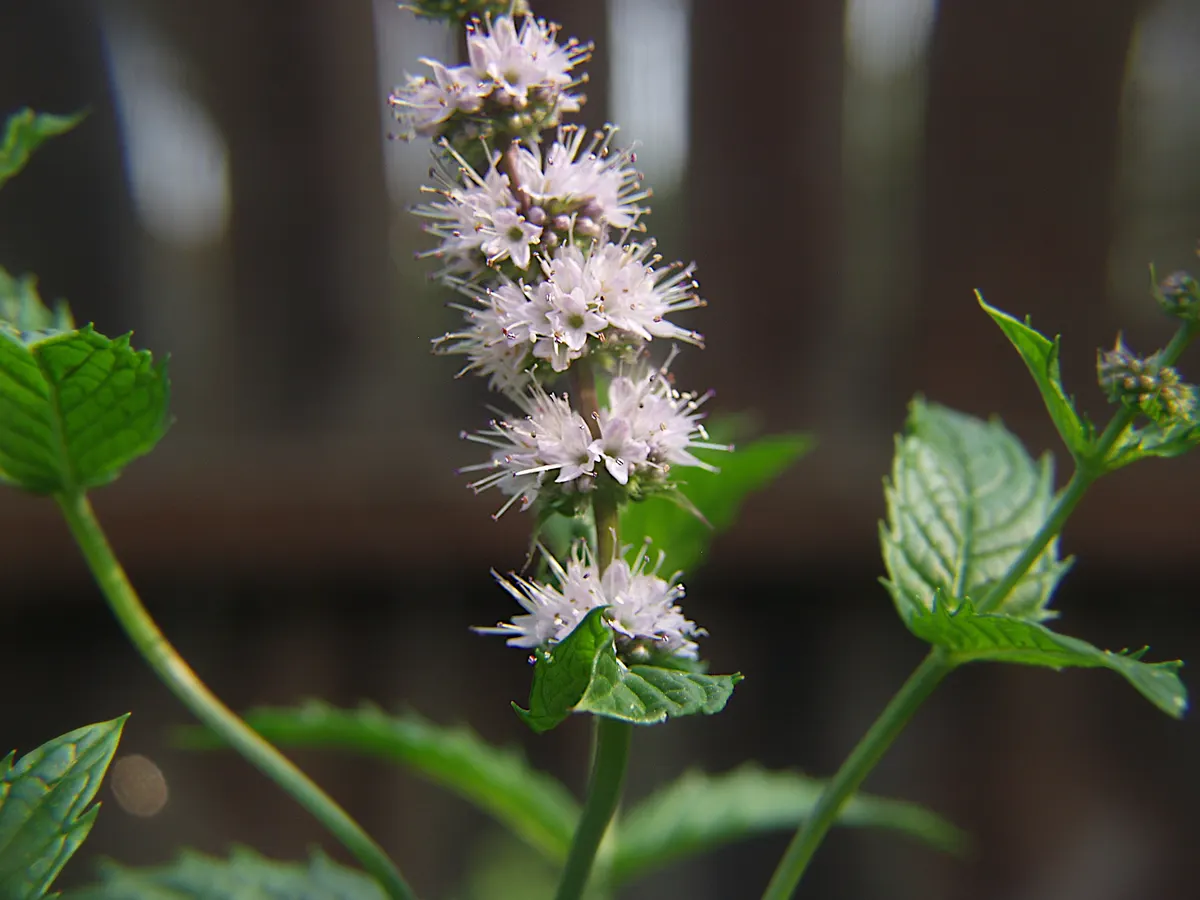
The species name spicata means 'spiked', after its narrow flower spikes.