Greenie Get the app
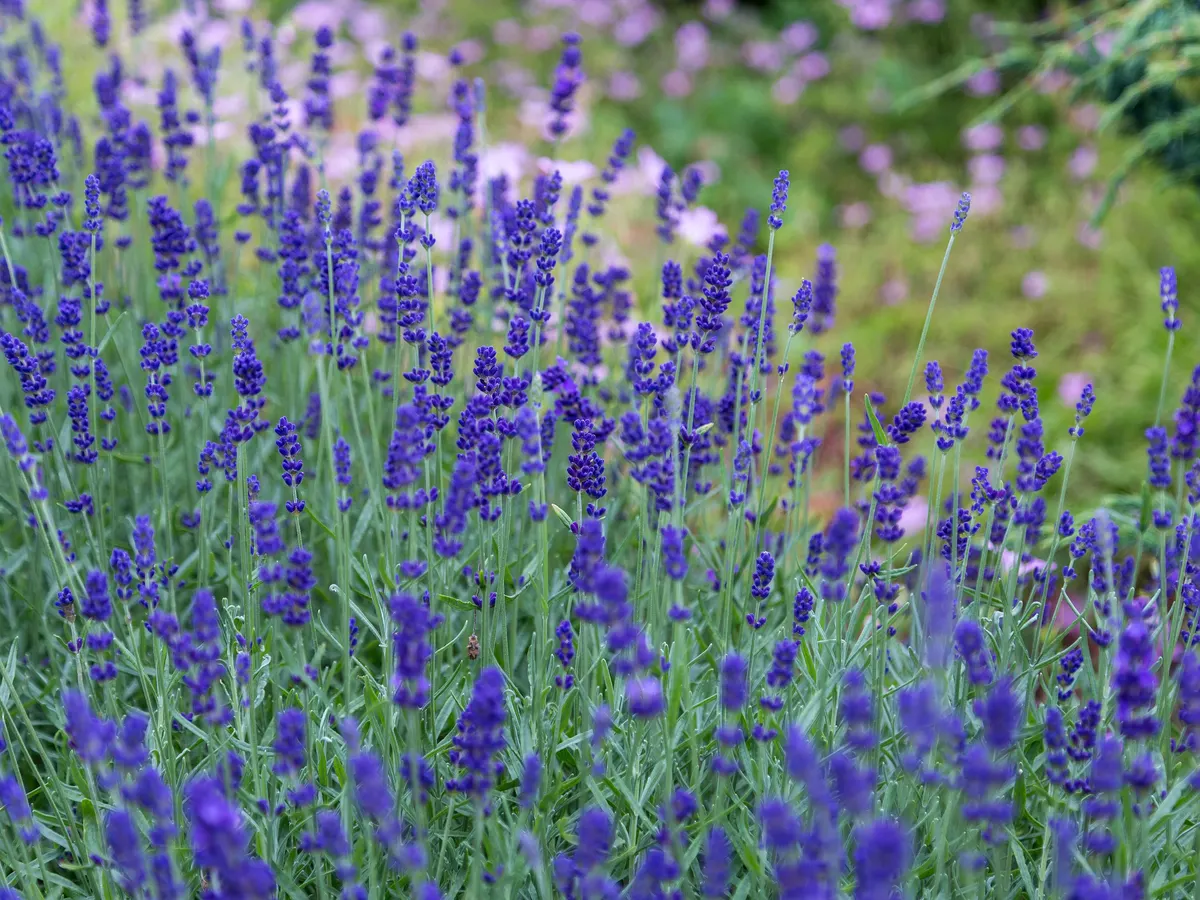
Lavender care
Lavandula angustifolia · Lamiaceae
Also called English lavender, True lavender, Common lavender.
A small evergreen shrub from the mountains of Spain, France and Italy with grey-green leaves and scented purple flower spikes. It needs full sun, dry air and a cold winter rest, so it struggles as a houseplant; it does best in a pot outdoors, brought into a cool, bright place only for short spells.
Light
Full SunWatering
Every 2 weeksDifficulty
HardPets
Toxic to cats and dogsHeight indoors
30-60 cm
Growth
Moderate
TemperatureUnconfirmed
10-24 °C
Not below -5 °C
Humidity
30% - 50%
Fine in dry rooms
Soil pH
6.5-8.0
Neutral soil
Native to
- Spain
- France
- Italy
Through the year
Water only when the compost is dry a few centimetres down; in winter keep it almost dry, as cold, wet roots rot.
-
Spring
Every 2 weeksTidy frost-damaged tips and start watering a little more as growth resumes.
-
Summer
WeeklyFlowering season: keep it in full sun and water pots when they dry out.
-
Autumn
Every 2 weeksTrim after flowering and reduce watering.
-
Winter
MonthlyKeep it cool, bright and nearly dry; a cold porch or sheltered balcony beats a warm living room.
Feeding
Every 8 weeks in spring and summer. Light, potassium-rich feed for pots. Plants in lean soil may need none.
Care tips
-
Treat it as an outdoor plant
Indoors it rarely gets enough light; a sunny balcony or patio suits it much better.
-
Add grit to the compost
Mix up to a quarter coarse grit into the potting mix for sharp drainage.
-
Trim after flowering
Cut off the flower stems and about 2.5 cm of leafy growth to keep it compact, but never into bare wood.
-
Skip rich feeds
High-nitrogen fertilizer gives soft, floppy plants; it prefers lean soil.
Common problems
-
Root rot
What you seeStems grey out and the plant wilts while the compost is still wet.
What to doRepot into gritty compost in a terracotta pot with large drainage holes and water much less.
-
Weak, floppy growth indoors
What you seeSoft, pale shoots stretch towards the window and few flowers form.
What to doGive it at least 6 hours of direct sun or a strong grow light, or move it outside for the warm months.
-
Leaf spot
What you seeBrown spots on the leaves in humid or crowded conditions.
What to doImprove air flow, avoid wetting the foliage and remove spotted leaves.
Pets
Is lavender safe for cats and dogs?
Toxic to cats and dogs. Contains linalool and linalyl acetate; eating it can cause nausea, vomiting and loss of appetite.
Good to know
-
Despite the name 'English lavender', it is native to southern Europe, not England.
-
Its flowers are a classic filling for scented sachets and are also used in cooking.