Greenie Get the app
Rosemary care
Salvia rosmarinus · Lamiaceae
Also called Rosmarinus officinalis, Garden rosemary.
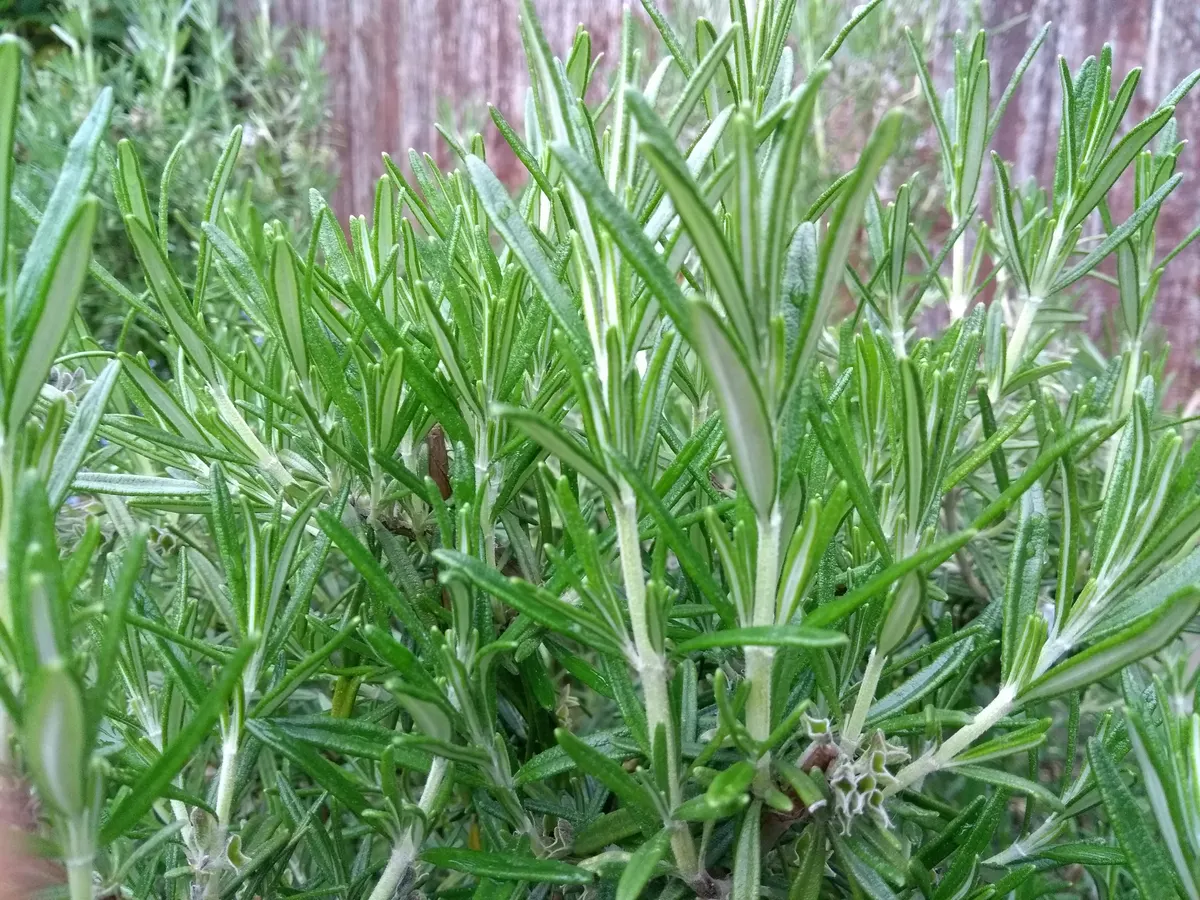
An evergreen Mediterranean shrub with needle-like, strongly scented leaves and small pale blue flowers. It now belongs to the sage genus. It grows well in a pot but is tricky indoors: it needs the sunniest window, cool winter temperatures and good air flow.
Light
Full SunWatering
WeeklyDifficulty
HardPets
Non-toxic to cats and dogsHeight indoorsUnconfirmed
30-90 cm
Growth
Moderate
TemperatureUnconfirmed
13-21 °C
Not below -3 °C
HumidityUnconfirmed
40% - 60%
Average room humidity
Soil pH
6.0-7.0
Slightly acidic soil
Native to
- Albania
- Algeria
- Bosnia & Herzegovina
- Croatia
- Cyprus
- Egypt
- Spain
- France
- Greece
- Italy
- Libya
- Morocco
- Montenegro
- Portugal
- Tunisia
- Türkiye
Through the year
Water when the top few centimetres are dry but before the whole pot dries out; never let it sit in water.
-
Spring
WeeklyMove it outdoors after the last frost and trim it after flowering.
-
Summer
WeeklyKeep it in full sun outside and water pots in dry spells.
-
Autumn
Every 2 weeksBring it in before hard frosts and place it in the coolest bright spot you have.
-
Winter
Every 2 weeksWater sparingly, keep air moving and watch for mildew.
Feeding
Every 4 weeks in spring and summer. Balanced liquid fertilizer at half strength. Pot-grown plants need little.
Care tips
-
Give it the sunniest window
It needs at least 6 hours of direct sun; add a grow light if the window cannot provide it.
-
Keep winters cool
A bright room at 10 to 15 °C suits it far better than a warm, dry living room.
-
Use a clay pot
Terracotta dries faster and protects the roots from staying wet.
-
Prune after flowering
Trim lightly to keep it bushy, but do not cut into old bare wood.
Common problems
-
Powdery mildew
What you seeWhite powdery patches on the leaves, usually in winter indoors.
What to doIncrease air flow with a small fan or open window, space plants apart and cut off affected shoots.
-
Root rot
What you seeNeedles turn brown from the base up while the compost is damp.
What to doRepot in gritty compost in a clay pot, and water only when the top of the pot is dry.
-
Spider mites and whiteflies
What you seeSpeckled, dull needles, fine webs or tiny white insects.
What to doRinse the plant in the shower and treat with insecticidal soap, repeating weekly.
Pets
Is rosemary safe for cats and dogs?
Non-toxic to cats and dogs. Listed by the ASPCA as non-toxic to cats, dogs and horses.
Good to know
-
Botanists have moved it into the sage genus Salvia; the old name Rosmarinus officinalis is now a synonym.
-
Its Latin name means 'dew of the sea', after the coastal places where it grows wild.