Greenie Get the app
Oregano care
Origanum vulgare · Lamiaceae
Also called Wild marjoram.
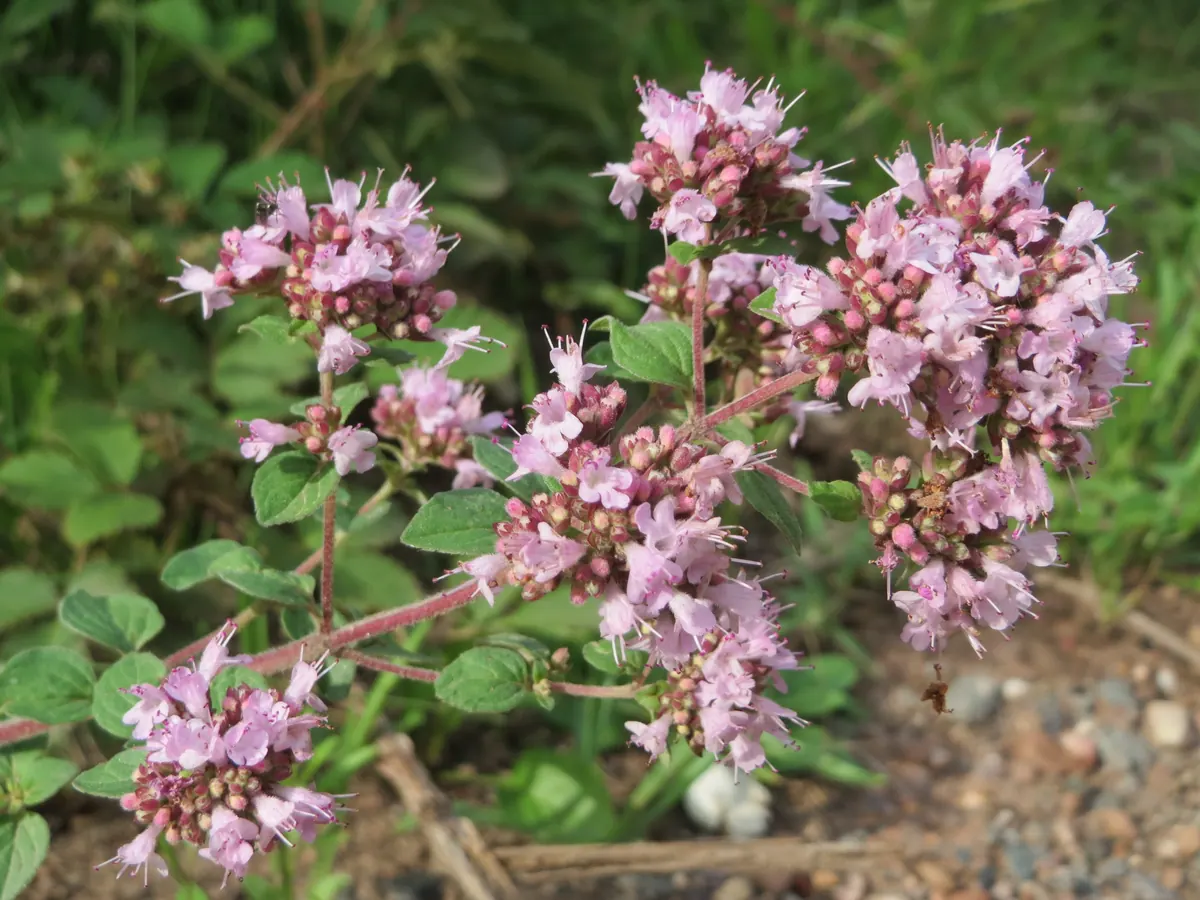
A bushy, spreading herb in the mint family, wild across Europe and western and central Asia, with rounded aromatic leaves and small pink or white flowers. Pot-grown plants stay around 30 to 60 cm. It likes sun, lean free-draining soil and little fuss, which makes it one of the easier herbs for a sunny windowsill.
Light
Full SunWatering
WeeklyDifficulty
EasyPets
Not confirmedHeight indoors
30-60 cm
Growth
Moderate
TemperatureUnconfirmed
13-21 °C
Not below 5 °C
HumidityUnconfirmed
40% - 50%
Fine in dry rooms
Soil pHUnconfirmed
6.0-8.0
Neutral soil
Native to
- Afghanistan
- Albania
- Armenia
- Austria
- Azerbaijan
- Belgium
- Bulgaria
- Bosnia & Herzegovina
- Belarus
- Bhutan
- Switzerland
- China
- Cyprus
- Czechia
- Germany
- Denmark
- Algeria
- Spain
- Estonia
- Finland
- France
- United Kingdom
- Georgia
- Greece
- Croatia
- Hungary
- India
- Ireland
- Iran
- Iraq
- Italy
- Kazakhstan
- Kyrgyzstan
- Lithuania
- Luxembourg
- Latvia
- Morocco
- North Macedonia
- Myanmar (Burma)
- Montenegro
- Netherlands
- Norway
- Nepal
- Pakistan
- Poland
- Portugal
- Romania
- Russia
- SJM
- Serbia
- Slovakia
- Slovenia
- Sweden
- Tajikistan
- Turkmenistan
- Tunisia
- Türkiye
- Taiwan
- Ukraine
- Uzbekistan
Through the year
Water when the potting mix has dried slightly, then let the excess drain away. It handles drought far better than wet soil, so water less in winter.
-
Spring
WeeklyTrim the plant back to remove straggly stems and repot or divide crowded clumps.
-
Summer
WeeklyHarvest often and cut off flower stems once they fade to keep it bushy.
-
Autumn
Every 2 weeksWater less and move it to the sunniest spot indoors.
-
Winter
Every 2 weeksKeep it fairly dry and in bright light; growth slows a lot until spring.
Feeding
Every 2 weeks in spring and summer. Water-soluble fertilizer at a low dose. Plants in fresh compost need little or none.
Care tips
-
Give it full sun
Six hours of direct sun or a grow light keeps it compact and flavourful; golden-leaved forms like a little midday shade.
-
Keep the soil lean
A soil-based compost with added grit suits it; rich soil and heavy feeding dull the flavour.
-
Cut it back before flowering
Regular shearing brings fresh leafy growth; the flavour peaks just before the plant blooms.
-
Choose plants by taste
Seed-grown oregano can be bland, so buy plants you have smelled or grow cuttings from a tasty one.
Common problems
-
Root rot
What you seeThe plant wilts and yellows even though the potting mix is wet.
What to doRepot into gritty, free-draining mix and let the top dry before each watering.
-
Spider mites and aphids
What you seePale speckled leaves with fine webbing, or clusters of small insects on the tips.
What to doRinse the plant, cut off badly infested shoots and wash leaves before using them.
-
Mint rust
What you seeOrange or brown powdery spots on the undersides of the leaves and twisted shoots.
What to doRemove affected stems straight away, avoid wetting the leaves and improve air flow.
Pets
Is oregano safe for cats and dogs?
Not confirmed. The ASPCA has no entry for Origanum vulgare as a whole or for the genus. It lists Greek oregano (Origanum vulgare subsp. hirtum) as toxic to cats and dogs because of gastrointestinal irritants, which cause mild vomiting and diarrhea, so it is safest to keep pets away from it.
Good to know
-
The genus name is usually traced to Greek words meaning 'beauty of the mountain', after the hillsides where it grows wild.
-
Oregano is a kitchen name more than a botanical one: several different Origanum species are sold under it.
-
The plant sold as Greek oregano, the classic pizza herb, is a subspecies of Origanum vulgare.