 Greenie Get the app

Bird's nest fern care
Asplenium nidus · Aspleniaceae
Also called Nest fern.
An epiphytic fern from the rainforests of Southeast Asia, New Guinea and tropical Australia, where it perches on tree trunks. Its shiny, undivided fronds, each with a dark central rib, rise in a ring from a hollow crown and open out like a shallow bowl. Indoors the fronds reach about 45-60 cm, and it is one of the easier ferns to keep in a home.
Light
Bright IndirectWatering
WeeklyDifficulty
MediumPets
Not confirmedHeight indoors
0.45-0.6 m
Growth
Slow
Temperature
16-21 °C
Not below 13 °C
HumidityUnconfirmed
50% - 70%
Likes humid air
Soil pHUnconfirmed
5.5-7.0
Slightly acidic soil
Native to
- Australia
- Brunei
- CXR
- FSM
- Indonesia
- Malaysia
- Philippines
- PLW
- Papua New Guinea
- Singapore
- Solomon Islands
Through the year
Water when the top 2-3 cm of soil are dry, pouring around the edge of the pot rather than into the central rosette. Never let the soil dry out completely or the pot stand in water.
-
Spring
WeeklyNew fronds unroll from the center; repot if needed and start feeding.
-
Summer
WeeklyKeep the soil evenly moist; it can go outdoors in full shade once nights stay above 10 °C.
-
Autumn
WeeklyBring it inside before nights drop below 10 °C and stop feeding.
-
Winter
Every 2 weeksRun a humidifier or use a pebble tray, keep it above 13 °C and let the topsoil dry a little more between waterings.
Feeding
Every 4 weeks in spring and summer. Liquid houseplant fertilizer at half strength, from late spring through summer. Do not feed a freshly repotted plant for six months.
Care tips
-
Keep water out of the center
Water collecting in the central rosette can rot the crown, so water the soil at the edge of the pot.
-
Handle the fronds gently
The fronds bruise and tear easily and do not repair, so place it where it will not be brushed against.
-
Use a loose, rich mix
A porous, peaty or fern potting mix that drains fast suits its epiphytic roots.
-
Repot only when needed
Growth is slow, so it only needs a pot one size up every few years. Do it in spring, as the first new fronds start to unroll.
Common problems
-
Yellowing fronds
What you seeFronds fade to yellow and new growth stops.
What to doIt is getting too much sun; move it to bright, indirect light such as a north- or east-facing window.
-
Brown frond edges
What you seeFrond margins turn brown and papery.
What to doMove it away from drafts, heat vents and fireplaces and raise the humidity with a humidifier or pebble tray.
-
Scale insects
What you seeSmall brown bumps along the midribs and undersides of the fronds.
What to doWipe them off by hand and use insecticidal soap if needed; ordinary chemical insecticides damage the fronds.
Pets
Is bird's nest fern safe for cats and dogs?
Not confirmed. The ASPCA has no entry for this species. It lists a close relative, mother spleenwort (Asplenium bulbiferum), as non-toxic to cats and dogs.
Good to know
-
In the wild, dead leaves that drop into the hollow crown break down there and become a private supply of nutrients for the fern.
-
In the wild its fronds can reach 1.2-1.5 m long, two to three times their size indoors.
-
The spores sit in straight dark lines on the underside of the fronds, running from the midrib toward the edge like a herringbone.
Similar plants
-
Palms & ferns Areca palm Chrysalidocarpus lutescens Bright Indirect Weekly
-
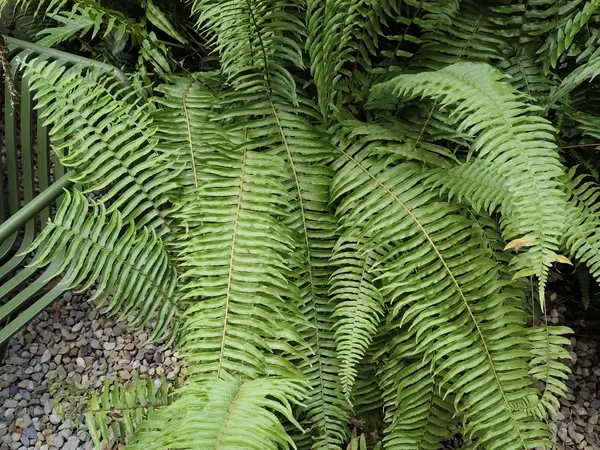 Palms & ferns Boston fern Nephrolepis exaltata 'Bostoniensis' Bright Indirect Every 2-3 days
-
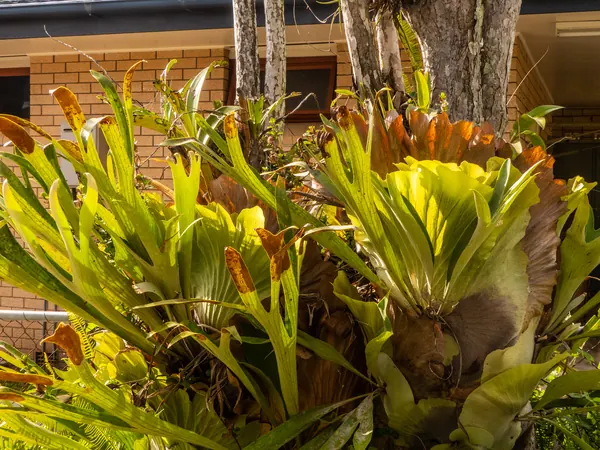 Palms & ferns Staghorn fern Platycerium bifurcatum Bright Indirect Weekly
-
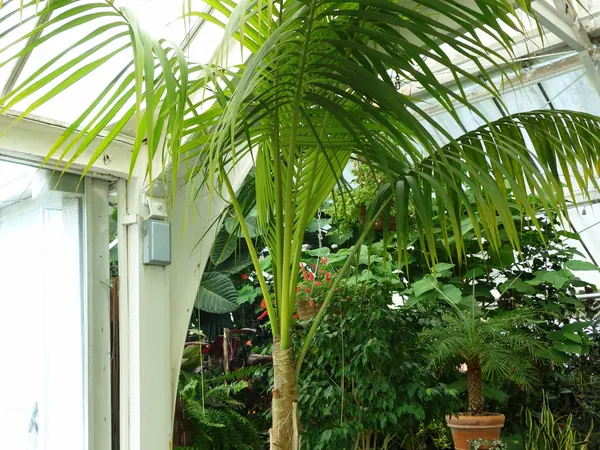 Palms & ferns Kentia palm Howea forsteriana Medium Light Weekly